
NIKHIL KAMATH · JULY 28, 2026
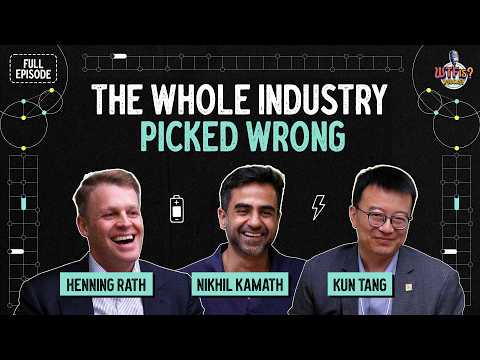
They Called The Trade Wars & China's Housing Crash | Nikhil Kamath | WTF is Finance Ep 4 — Transcript
Full Timestamped Transcript
Matthew, as someone living in California, is the world turning left again? Are we going back to socialism? Not in Cali-- No, actually, California, San Francisco is, you know-- If I take San Francisco out of it. No, well, uh... No, I mean-- [laughter] Shouldn't debt be priced by the ability of the borrower to pay back?
Well, right, but that's the thing. They can. They can always print the money. The US cannot always print its way out of any kind of trouble. Question here. Is de-dollarisation real? Do you think crypto has a future? Can you wager a guess as to what will happen, again, in the next ten years? Well, this is the interesting question, right? I'm talking about a theory, right? In practice, it doesn't work this way. That's where it gets tricky. Probably just one thing, that is to embrace whatever comes. That sounds scary.
[laughter] Thank you both for doing this. Matthew, would you like to go first and tell us a bit about yourself? Sure. I write about economics and finance. I have a publication called The Overshoot, and I co-wrote the book Trade Wars Are Class Wars. And Ning? I'm a professor at Shanghai Jiao Tong University and Tsinghua University, and also, I wrote a few books on investment in China's macroeconomy, one of them is titled China's Guaranteed Bubble, predicting the collapse of China's housing bubble.
And then, I've been advising policy makers in China and in many other parts of the world on macroeconomics and monetary policies. Since we are in China today, maybe we can begin by you telling us how the Chinese economy is doing now. I think the economy is stabilising. I think we have been having some corrections in the housing market over the past five years, that's taking a drag on the macroeconomy. That being said, I think-- the new growth engine being the so-called new quality productive forces, higher-end manufacturing, new technology, AI, and high-end semiconductors are coming up pretty strongly.
There are a couple of issues that's bothering the economy right now. One is, of course, consumption, which is not growing as strongly as people are hoping for. The other is, of course, increasing frictions on the export or the trade side of the economy. But both sides are doing okay. Relatively speaking, in the global context, people are just wishing for the better. Can you bucket China into ten-year periods? Because I don't have that much context. I've read a few books on China, but I don't see... I wanna know what changed between 2000 to 2010, 2010 to 2020, and what is the last six years like?
I think, probably, one... I think one benchmark people would commonly use is the general growth speed. I think for the first ten years of this century, it was growing over 9%. And for the past decade or so, it was around seven. And over the past five years, it's more around five. So, I think that's a numerical summary. But then, I think if I have to use major milestones in history, 2000 marked China's entrance into the double hill, which is really helpful to China's economy.
And then, of course, we have the four trillion stimulus packages coming out in 2009, which is a big boost for both infrastructures and the housing bubble. And I think, of course, COVID is, like, a shock to the economy. And then, the correction or the crackdown on the housing sector is having a lot of influence over the economy over the past five years. Matthew, this is like a conversation, so feel free to butt in wherever you like. [Matthew] Sure. I think one thing, you know, as Ning was saying, I think it's worth emphasising the extent to which COVID was really a break, not obviously uniquely for China, but for a lot of the economies in the world.
And, you know, one of the big points of contention that we've seen in sort of China's relationship with other countries, and it's come up recently in the past few weeks at the G7 meeting, is this idea of China's rising trade surplus and the idea that the new productive forces that are beneficial, on the one hand, for Chinese producers are considered very threatening for competing companies, and, you know, Europe, in particular, with motor vehicles. And I think one piece of context that's helpful here is that, if we look at China's external balance with the rest of the world, in the years immediately leading up to the pandemic, the trade surplus, depending on how you measure it, was around, you know, 100 to 200 billion dollars a year, which is, you know, on one hand, it's a big number, but it's... the global economy, we're talking about tens of trillions, right?
Now, it's more like 1.1 trillion dollars a year, so a big shift between 2019 and now. That's really a function, I think, of several things, but I think very much the response to COVID. And one thing I think that's striking is the productive side of the economy, in terms of the factories being able to produce more and sell things, recovered from COVID faster and better than the domestic demand-consuming side. Part of that reflects, as Ning was saying, the consequence of the housing bust.
Part of it reflects other factors as well. But that divergence has been significant and persistent. So even, as sort of the overall economy, as I'm saying, stabilised, that sort of-- the composition and unbalanced nature seems to be... I'm not sure if it's necessarily continuing to get worse, but it's very large. And as I said, the size of the surplus now relative to the global economy is quite large, in particular relative to the size of China's trading partners. I want to chime in about-- I was in a session yesterday called the Two-Speed Economy.
It's actually what I call a K-shaped economy. I think that's not just a China phenomenon, this is becoming a global phenomenon in-- across countries or within the same country across different social stratas. There are very different or diverging trends going on. And I agree with Matt, I think China's export has been increasing very rapidly over the past five, six years. But then, I think there are multiple-- There's a multitude of reasons for that happening. I have a question here. Some countries have a trade surplus, some have a deficit.
Fewer have a surplus, more have a deficit. What happens if this continues, ten years, twenty years down the line? Well, one answer, potentially, is nothing. You know, it depends. There's nothing inherently sustainable or unsustainable about deficit surpluses. There are reasons why certain places might want to be spending more than they're producing. You know, the canonical example you'd have is a society where you say you have a lot of younger people, it's a relatively under-invested infrastructure, a lot of growth potential, maybe it's poor, less technologically developed.
That's a kind of place where you would expect that the needs of the people to invest and grow rapidly and their future productive potential are such that it makes sense for people in the rest of the world to invest there, you know, lend them money, export, you know, advance machinery, things like that. And they could have persistent trade deficits for a while and grow rapidly and that could be beneficial for everyone. The flip side is, you can imagine this is a society sort of in the opposite situation, maybe it's older, already at the technological frontier, there's less growth potential. They have already advanced goods-- Speaking about the US?
Well, this is the interesting question, right? -[laughter] -I'm talking about a theory, right? In practice, it doesn't work this way. That's where it gets tricky. [Ning] Also, on the theoretical side, I think he meant... That is the case, one would still have a gold standard and better goods, but now that that is gone, I was just trying to add on, world treaties' no longer, necessarily, the only determinator in this equilibrium. Now, you can have-- I mean, one side is the trade imbalance, and the other is the capital kind of imbalance that people have different preferences for-- putting their money into different countries, or by design, certain countries have the ability to produce more capital or monetary supply than other countries.
So that's, somehow, balancing of the imbalances in the trade area. Right, I think, you know, particularly in the US case, and it's not unique, I think it's true for basically... We're not talking about a theory anymore. [Matthew] Well, yeah. The rich English-speaking countries in general, the thing-- what they have as an asset, as a legal system, that people find very investor-friendly, -that's a language that people who are-- -Used to be. Well, okay. I said the English-speaking democracies, so this is a broader universe than just the US. But, you know-- And the language that basically any, you know, rich person the rest of the world knows.
So, that-- those are going to attract, you know, savings from the rest of the world relative to other countries, regardless of whether it makes sense. So you have the strange phenomenon, we've seen this for decades, of places that, in theory, ought to be, you know, sort of standard theory, should be having trade deficits because of their investment needs, actually having surpluses and sending, you know, buying financial assets rather than borrowing their net lending to places that are rich, like the US, the UK, Australia, Canada, New Zealand, because their financial systems are accommodating and sort of meet that need.
And which is a very strange-- not what the sort of standard theory would say is optimal, but it's what we've been observing for the past several decades. And just to play the devil's advocate, I think, I mean, in the old regime, I think when there is really prolonged and serious imbalance in trade, I think, if we use history as a benchmark, war is, unfortunately, the word that we would have to visit or revisit. What that is, when the two countries or one country with other countries cannot resolve their disputes or cannot address the imbalances for a very long period of time, I think the one which, normally, is on the deficit side, but, sometimes, because the surplus side cannot claim the money they are owed, there will be a war or some kind of military conflicts.
Yeah, there is, unfortunately, a history of colonialism and imperialism -tied up with that older model. -[Ning] Yeah. Is there an unsaid understanding? Say, China has a tariff... Say, China has a trade surplus with America... Over the long term, is there an unsaid understanding that China will buy, say, American treasury, for example, or invest a part of the money back into America? I think, for now, I would say largely yes, because I think it's both push and pull. One is, I think Chinese do find the US dollar to be still a "safe asset" and it's deep enough that we can deploy our capital into.
But at the same time, it's also because there's a lack of alternative. I mean, in a way, this is related to what we discussed in a different session, about RMB internationalisation, because by that time, even though we're not happy enough with the US dollar as a installation of value, there's really no other alternative we can put the money into. Of course, gold is one possibility, but the market is not deep or large enough for Chinese investors. But why can't you reinvest the money back into China to maybe improve the infra or manufacture more? One is I think, China's manufacturing has already received considerable investment, so I don't think we're really looking for capital in that regard.
The other is, I think that happens in trade imbalance, so it happens in foreign currency. And of course, it is in the country's interest to keep certain amount of currency in order to-- of foreign currency in order to stabilise its own exchange rate or for the security of the unspeakable. So, what matters? When I'm looking at economics and I'm seeing how well a country is doing or what it should do, I look at the trade balance, I look at inflation... Fuller employment, I guess, domestically.
Employment. What else? I mean, you look at production of what it is people want. I'm not even sure the trade balance is necessarily the metric, by the way, of success, because there are a lot of things that can affect the trade balance. One guaranteed way to either reduce a trade deficit or to generate trade surplus, is you just crush your domestic economy. If people can't afford to eat anymore, then, you know... but they still can sell things to people in the rest of the world, you're going to have a shift in the trade balance. That's not a benign outcome. I think one thing that's useful to remember is that a lot of the big shifts you see from surplus-- -So, Korea, right? -[Nikhil] Hmm.
Very great developmental success story, people talk about export-led growth. But, up until the Asian financial crisis, South Korea actually ran trade deficits consistently from 1953 until 1997. I think it was one year maybe in '89, but basically, until then, deficits. Then you have the Asian financial crisis. It's a very traumatic experience. And then, ever since then, they've had large and persistent surpluses. And I think it's fair to say that, even though Korea is doing much better now than it was, say, in 1997, the circumstances that led to that shift in the trade balance were not benign.
They were not good for Koreans, I don't think it was good for the world. And I think that's an important context for understanding. Is that what worked for China? I saw some data that China only consumes 40% of GDP. In India, that number is 55%. In the US, it's 68%. Did China domestically consume lesser, and, hence, they could export more? Proportionally yes. And I think there are several reasons for that. One is, clearly, just culture. I think East-Asian countries have this tendency, whereas, I think India does not have that historical tendency.
Part of that is the shock from COVID, both in terms of people's balance sheet and in terms of people's confidence or their feeling of safety with consumption. Another is, of course, what Matthew mentioned about, there is some imbalances. There's certain suppression of certain factor prices and there's some inflation of certain other factor prices. I think in the interest of the country, maybe not necessarily to a particular sector of the economy or the employees in those sectors. So I think that is slowly adjusting, slowly but steadily. But I understand and I think I can see that certain other countries have issues with this model of growth.
But then, going back to what Matthew has said, I think whatever happened to South Korea or some other Southeast Asian countries during the financial crisis has taught China a lesson about running deficit, maybe even a brief and concentrated period of time could open your country to vulnerability, which is a reason for China wanting to continue its leadership in consisting or insisting on its export surplus. Yeah, I would also say that that's not the only time that's happened. So if you look at the euro crisis, I think we've seen, in retrospect, a similar phenomenon where a lot of countries were not concerned about, effectively, a balance-of-payments crisis of the kind that hit these Asian countries, you know, 15 years earlier, and then they were.
And then, you look at the past ten years, and those countries have adjusted very dramatically. And even the countries that didn't necessarily get IMF bailouts or other things, you know, the ECB, they have shifted. And so, Europe as a whole, has had this massive structural shift in its behaviour in terms of spending less relative to what they earn. Which, again, at the individual country level, it's understandable why you have that traumatic experience one avoided. But, from the perspective of the world as a whole, it makes everyone worse off. And so, this is a really unfortunate phenomena that keeps happening, but that's, you know, the sort of the structure of the way the financial system as it is, you know, having these periods of severe stress.
And then, if you're in trouble, I mean, in theory, the IMF is there to help you. In practice, it hasn't really worked the way I think it was intended to. And that's why we kind of keep ending up in this situation. Yeah, I think there's a little distinction to be drawn about, well, how much the whole world is going to benefit or suffer from a prolonged period of trade imbalance. But then, there's also, I mean, there are winners and losers to that. And depending on which camp your country falls into, I think the countries may have very different views on, well, yes, maybe the whole world is probably coming down, but then, at least, I'm still in a more favourable position in the whole world.
What happens, though, like, ten years from now? Say everybody continues at the same level, the surplus and the deficit. I think I do have a couple of imaginations in my mind. One is, of course, exchange rate. In a way, exchange rate is the way how to adjust trade imbalances. And of course, I think China is going into a... I mean, I still remember, China started its exchange rate reform about a decade ago, and then, RMB went down in devaluation for about 30%, but it has appreciated 10% to 15% since last summer.
So I think it is entering into a period where there is wider range of two-way fluctuation, which I think is somewhat related or reflecting of the trade imbalances, not necessarily as closely as it should be in the past two, three years. But then, I think that's one way of adjustment. Of course, probably some other countries are thinking "China is not adjusting enough or fast enough." So that's one area of adjustment. The other is, I think, I mean, really depending on whether you're the global South or you're the more developed economies, I think the global South has issues with the imbalances with China, but then, at the same time, China is investing heavily into those countries through ODIs.
So, yes, there are some issues, but then those countries seem to be feeling, "Okay, there will be a transitional period where many of the goods we're now importing from China will be eventually produced in China." Of course, there's a whole different kind of questions we can ask, but then, they seem to be less concerned, whereas, the more developed countries are thinking, "Well, does it mean that each and everything that we're going to consume in our country will eventually be produced in China," which I think is probably the bigger issue we're talking about here. Are tariffs an answer?
I've never heard an economist say so, but maybe you're the rare exception. I'm not convinced they would. I mean, look, strictly speaking, the currency is the thing that you'd expect to move. And what's striking, I mean, Ning has said that China's currency has moved more relative to how it used to do. But it's also striking that the current-- the exchange rate now, on a sort of trade-weighted basis, especially if you account for the fact that China's had a lot less inflation than the rest of the world, is actually much lower now than it was, say, five, six years ago.
Which is striking because that is the time period when Chinese goods became much more competitive on world markets. And so, normally, one might think, if we sort of have a sort of standard model, that's when your currency would appreciate that-- If you and your company-- country's workers are making things that are better and more valuable for the world, one way they are rewarded for this is that their purchasing power goes further internationally. And, basically, their wages are worth more internationally because the currency goes up and they can import more. And the fact is that it's actually been reversed in the past six years.
And, obviously, a lot of moving parts here in terms of "China's not a fully open capital account, what's going on with the invention," and all that. But it is striking that that is, so we're sort of zooming out and say, like, the currency is very low. How you get it from where it is to what might make more sense in a way that isn't destabilising from China's own perspective, Chinese government's perspective, is a challenging question, but I mean, that, I think, is sort of a macro perspective. I think that's also why I think some of China's trade partners are looking at it and saying, "Well, this is, you know, kind of unreasonable." And if you have that perspective, tariffs...
certainly not the first best option, but you can see why some people might think, like, "Well, the tariff might correct for this." So, like, the normal reason you wouldn't use a tariff is that... If you have normal floating exchange rates, you put the tariff on, and that increases the relative appeal of investing in your country, so people are going to send money there, and then your currency goes up, and then the value of the tariff... basically, what you've effectively done is you've just screwed over your own exporters, and nothing else has changed. So that's why people don't use tariffs, historically. But if the currency is not moving, then that creates a different dynamic. I won't deny that I think tariff will have some certain impact on balancing the trade imbalance, and also, to that extent, I think the floating of exchange rate will do something similar.
But I do also want to bring up the possibility or the alternative explanation about, I think, Matthew mentioned about why China's export has really taken a big lead after-- big leap after the COVID period. I think in that period, yes, of course, there's some disruption in the global supply chain. But then, at the very same time, China was managing very well in order to have a very well self-contained supply chain which can produce a lot of things, not just without disruption, but at a much lower cost or much higher efficiency.
So, in that regard, yes, if you levy a 100% tariff on toys produced by China, probably China will lose it's competitiveness. At the same time, even if you levy a 100% tariff on new energy vehicles, China's new energy vehicles will still be very attractive in European markets or even in the States. Yeah, I think it's also-- the mechanism of tariff is, you're basically making it more expensive -for your own people to buy things. -[Ning] Yeah. So, there might be reasons to do that, just like there are reasons to raise taxes sometimes. But it should be clear about how it works, and who's paying it, and what the costs are.
And that's usually why people don't like to do them. Yeah. Again, in theory, I think the whole world will be worse off with tariff, no matter how much ends up levied from which country. Are we aligned on that? The world will be worse off with tariff? Probably. I mean, obviously, it depends on sort of what the second-order reactions are. I mean, if the thing you're worried about is-- I agree to that. The second-order effect. Right. If the situation... So, I mean, to be less sort of generic, like, Europeans are thinking about this as a possibility vis-a-vis China because of their concerns and their auto industry.
And if their concern is that if they don't have... If their first choice is, they would like either Chinese investment in Europe to produce electric vehicles that creates jobs of worth, or China has a currency appreciation, some combination of those things, then they would prefer that. And then they say, "Well, if we can't get that, then we do this tariff because we think there's a systematic problem that's going to wipe out a large chunk of our industry." You can see why, from their perspective, it might make more sense. Even if, sort of, starting from blank slate, I'd say this is not going to make people better off.
And like many other large and complex issues, I think there's no one solution to the problem. [Nikhil] Right. But if that logic were to be true, I get applying a tariff against China, but there are many countries which don't orchestrate their currency. You'd levy tariffs on them too, right? What's the logic there? I don't think there is-- I mean, I'm not-- I'm not defending tariffs, I'm talking... You asked the question. I think it's probably fair to say that we are not... both of us, neither of us, is a big fan of tariffs-- -[Matthew] Yeah, I'm not. -But then-- [Nikhil] Yeah.
When you guys said earlier that you went to college together, was that a deal? -[Matthew] Yeah, well-- -He went there for college. I went there for PhD. -[Nikhil] So, at different times. -Yeah. How old are you guys? I know, but I want you to say it for camera. Old enough. -[Matthew] Yeah, right. -[laughter] I'm 39, I mean... -Fifty-three. Yeah, -[Nikhil] Same age. Okay. I'm asking you all the questions that I don't have answers to. And I wish I knew.
Why is American debt, or American treasury, say, T-bills, 20-year long-term debt, why is it still being bought at 4%? With the amount of debt that America is sitting on, I don't get why the world is buying this debt at 4%. So, mostly, it's not the world, somewhat it's-- actually, it's Americans. So, I guess that's one point. And in general, and I'm sure Ning has a lot of thoughts on this as well, but I mean, in general, bond yields for countries that have their own currencies, like the US, like China, like the UK, the interest rates mostly are a reflection of what people think inflation and growth are going to be in the future, and it's essentially a question of... This is...
You know, if I have a choice between buying this thing that's going to pay a fixed amount over time versus, you know, stocks, they're going to go up a lot more, you know, that's essentially what sets the interest rate. And people, they can borrow money if they want to buy it, if they think it's too... the yields are too high or, you know, things like that. And that's mostly what's driving it. And the amount of debt outstanding is more of an issue insofar as you think it's going to affect inflation in the future. But even then, it still gets back to what you think inflation is going to be. But shouldn't debt be the ability-- Shouldn't debt be priced by the ability of the borrower to pay back?
Well, right, but that's the thing. They can. -They can always print the money. -Yeah. So, that's why there's only the inflation point. So, as long as you don't think they're going to be, you know, printing so much that it moves inflation meaningfully, and then even then it's still a bet on inflation. There's really a bad precedent to that, because a lot has been printed. So, I come back to the question, why... Okay, both the Americans, domestically, and foreigners, why are they funding the American government at 4%? I would probably... For domestic investors, I think there are a couple of issues.
I do a lot of research on behaviour economics. So, one is, they call it local bias. So, people prefer to buy securities from their own country. -Period. -Yeah. Every country is like that. The other is, I think the American economy has been doing very well. And I think for American own people, even if the country cannot repay its debts, as long as it's printing the money enough and fast enough, then I think the American people are happy enough with that. I think the bigger question is for foreign holders, both institutions and, to a smaller extent, retails, I think there are a couple of reasons there.
One is for, I think the largest holders of US dollars is largely foreign reserves. And for investors in those regards, or some, to a certain extent, sovereign wealth funds, those institutions, they require liquidity. And they also require the depth of the market. And there's just no other place they can turn to. I mean, no other is too strong but then... I mean, you can turn to crypto, but then it's only, like, one or two trillion dollars, and then gold is a little bit more than that. But other than that, we're talking about trillions and trillions of dollars of reserves, which have to find a place to park.
So, in that regard, they have to park in the US or there's just no other country. There's no big enough security for them to find the alternative. So, I think that's one thing which, I don't want to use the word "hijack", but then people don't have the alternative. So, that's one explanation. The other, yes, I think, as Matthew has pointed out, US has been doing pretty well after the Second World War. Probably not as well as before, but then-- I think it all concentrated in the past 20 years after the global financial crisis. Because in 2007, if I'm not mistaken, the balance sheet of the Fed is less than $1 trillion.
It was as high as almost $9 trillion, and now, I think it's falling back to somewhere between six and seven. So, we're talking about the Fed is holding six, seven times as much in its balance sheet, which is pretty much the money it has printed out to the rest of the economy. So, I think that's going to affect both inflation in general and also asset prices, which I think is more concentrated in the US. So, I think that's going to have long-lasting and serious social and political complications. But then those things take a far longer period of time to adjust.
I think one thing just to point out that's sort of a slightly more benign interpretation of this is, as Ning was saying correctly that, foreign investors, particularly reserve managers, want liquidity, which means there has to be a big market, but the only way it's a big market is if there's a lot of debt in the first place. So you cannot have a liquid market for assets unless the government is borrowing a lot in the first place. So, I mean, it kind of goes together. It's like, why is there not a European alternative? Like, Europe is a very large... close in size, right, collectively, to the United States. Extensively has a pretty investor-friendly legal system, more or less.
But it doesn't really compare. Part of it's the market's very fragmented. Individual countries have very strong incentives against borrowing, in part because of the euro crisis and so forth. And so, you know, there's a reason... You know, Japan's an interesting case, right? There's a ton of debt outstanding, actually relatively popular to a certain extent, even though the yields, until very recently, were basically zero. But, you know, again, you have to... And this is actually something that came up in the panel that Ning was on yesterday, is, you know, China, in theory, could have a place here, but the central government does not issue much debt. -A lot of reasons for that. -Yeah. But that is going to naturally reduce the demand or the appeal of this thing, these instruments for foreigners, if there's not a lot of it out there and it's not traded.
China has capital controls. So does India, where I come from. I personally believe that, long term, if we didn't have capital controls, more money would actually flow in and less would flow out. How is it in China? Do you feel that way? Do you think capital controls are a good thing? Or money should be more fungible? As a market economist, I don't think capital control is a good thing. But then going back to what you have said, I think I... I think in the very, very long term, depending on how you define long term, I think, yes, probably removing capital control, there will be more money flowing in than flowing out.
But in the very short term, this is where I think policy makers are most concerned in almost all countries, I think they're concerned with a short-term outflow. And that's going to create really drastic shocks to the financial stability. And we have experienced that or witnessed that in the Asian financial crisis and in some other episodes of history. So, I think that is where the central bankers and the policy makers in China are putting more attention to. And that's sort of explaining why China is unwilling to or hesitant in removing capital control completely.
I think China is going towards the right direction, but at, probably, a slower pace than the rest of the world is hoping for. The rates we spoke about, the treasury rates, 4%, if you had to call it in ten years, I'm asking you the same thing because I run a fund and I want to know how to allocate money. Where would you call American long-term debt? What rate in ten years? Given that I don't feel confident I can predict what's going to happen in the US in the next six months...
[Nikhil] Yeah. I'll push back a slightly different way. I actually sympathise with the idea that heels are somewhat low, seem too low in the United States now. -Not saying they'd be ten years from now. -[Nikhil] Sympathise with us, or... -Or with what you were saying. -[Nikhil] Right. Although, not necessarily for... I'm not sure if it's the same reason, but I think, essentially, that, actually, the growth outlook on the one hand in the US, I think, is somewhat better than had been implied when people were more concerned with pricing and a lot of rate cuts.
And also the flip side, that inflation, I think there was sort of a very naive, optimistic view that inflation was just going to go right back down to 2% without any issues. And I think that didn't make sense to me before the Iran war, and it still doesn't make sense to me. And again, for actually relatively benign reasons, insofar as the economy is doing pretty well, the job market's not deteriorating. It had been stuck at 3% for a long time. Like, why would it slow down? And so, that's kind of where... You know, if you think that, in fact, there is this sort of growth impulse from AI-related investment, I would think that would increase the returns on risky assets, which means that non-risky assets should pay more compensation, which means yields should go up.
We've seen a little bit of that in the past six months, but I'm not sure it's been enough. I don't feel... Unlike you, I do not run a fund, so I don't feel confident enough to actually... There's a lot of risk-managed things associated with that. But that's kind of where I would be on that. Looking at sort of the longer term, you'd have to look at things like, "What is the state of the rule of law in the United States?" What's the growth? What happens to demographics, right? I mean, we've already had a huge change in the demographic outlook in the past couple years. That is going to have an impact on, you know, long-term growth trajectory, which should affect, you know, what you think is the right set of interest rates.
So there's a whole lot of things that, you know, looking ten years out-- Are there any direct correlations between demographics and economics? Like, the world is ageing. India, which was a very young country, is aging too. What changes from an economic policy thinking, in a way, when the world is older? So, in theory, what people would say is that you have less need for investment because you're not having the extra growth of more people.
Older, I guess... there's a population growth rate. Then there's, like, the age composition. Those things tend to be related, but not quite the same. So, if the growth rate of the population is slowing, you should expect to have less investment. That should push down interest rates. All else, you know, not changing. There had been research saying that aging populations should actually lead to higher interest rates. But if you look at what the samples were, they were all based not on the actual age structure, but the dependency ratio. And the dependency ratio of the societies we're looking at were all ones with lots of kids.
Which means they were actually growing rapidly. So, it's a very different dynamic than having a lot of old people. So, even if the workers-to-non-workers ratio looks the same, they're going to have a very different kind of perspective there. So, I mean, the only real example we have of a country that's sort of done this is Japan. Although, interestingly, Japan now, you've seen interest rates go up a bunch recently. So, you know, who knows? There are a lot of moving parts. Demographics are clearly important, but how they translate to everything else, I mean, I'd love to know what Ning's thoughts are on this. I think I tend to agree with Matthew. I don't think I'm going to give you a straight answer.
A couple of things. One is, I think the whole world is undergoing so many changes that it's very hard to make any reliable predictions on almost anything. I recently published a book titled Non-Linear Thinking. I just think that we tend to think linearly even though the world is going through drastic changes. The second is, I worry less about demographics, even though it is a very, very serious issue. I worry more about the relative safety across different countries. After all, I mean, the yield on treasury is not just a matter of the investment value, it's also about the safety.
So, I think, given all the things that's happening in the world, I think, relatively speaking, US is probably still the safest. So, in that regard, what is the benchmark for the whole world when it comes down to monetary policy? I don't know. I think, ever since the quantitative easing, we have entered into a new regime that nobody really knows the answer to. Because beforehand, we thought, "Oh, such quantitative easing, such a big supply of money will lead to inflation soon enough." But then, we haven't. We have been searching for inflation for almost 12, 13 years before it finally came back a little bit.
But then, it seems to be disappearing again. So-- Why is that? If the raw input for everything is energy and energy prices have shot up, I'm not even talking about the traded value, but the actual physical value of the commodity, why has inflation not come back in a more meaningful way? I have a theory, a sort of half-joking theory, which is, I mean, look at the stock market in the US and look at the housing market in China up until 2021.
Yes, we don't have increase in inflation or the CPI for many countries, but then most of the money went into asset prices and property prices. So, in a way, that is good, because that is absorbing the pent-up demand for the consumer prices to go up. But then, I think the longer eventual social problem from that is, you have increasing income or wealth inequality in a society, and then, eventually, that's leading to some extreme political movements, which, I think, we're experiencing right now.
Is de-dollarisation real? I know China started... China changed after the tariffs on Russia. I think the pace of change increased. What's happening now after the conflict and the geopolitical turmoil of the past couple of quarters? I think China has been pushing the RMB to be more internationally adopted through either trade or through exchange swaps. I think that the case with Russia is just one small part of the general push for RMB internationalisation.
And to a greater extent, I think China has has been increasing its trade surplus by so much that it has accumulated a lot of overseas adoption of RMB. That is one part of why RMB is becoming more popular. But just as we discussed in the other session yesterday, I think in terms of the total settlement for the whole world, RMB has not gone up a lot in the past decade or so. So, in regard of, well, is this a really big push, or is there some balance or market mechanism is at play?
I think I would tend to think the latter is more powerful in, yes, China is becoming more powerful and more international, but then it's still in the hands of, in the eyes of the beholder, about which one I would like to hold eventually. And I think a big question for that is how to provide a better venue for foreign investors to invest in offshore RMB-related or denominated assets, which, I think, goes back to Matthew's points about Chinese companies or Chinese government would have to issue more safe assets overseas, which has not happened so far.
Yeah, I think getting back to one thing Ning was saying before is, you cannot de-dollarise unless there's an alternative. And the, you know, RMB is obviously one possible one. I mean, one also obvious one, and it was very obvious to people 20 years ago, but no one talks about it anymore, is the euro. Which again, like, why has that not become more of an alternative? I think, you know, specifically the Russia case is interesting because it wasn't unilaterally the US, right? That was actually a very coordinated move with the Europeans, with the Japanese. Part of the reason the Russians were so surprised about this is, they thought they'd actually protect it because they moved all their reserves mostly out of dollars in anticipation of this, and were very disappointed when they found out the Japanese froze their reserves, for example.
So, in that... moving to what, I think, is the big question here. And if there isn't... constructing a market that would be compelling, having a currency where there are the assets for it and the infrastructure, not a lot of people seem to be willing to do that, and that's what has happened here. On that topic, I think crypto was considered as a potential contender to that. And of course, I mean, it has its own drawbacks. But then I think the introduction of stablecoin in the past couple of years may be solidifying US dollar's dominance in a way about...
RMB is not pushing as hard or as fast into that direction. Stablecoins are just dollars. It is just dollars, but a different way of using dollars. Plus, like, gold, and some other weird stuff... But I think the technologically more advanced and more efficient and cheaper way of adopting dollar may give dollar an additional edge. I would put stablecoin as dollar moving away from SWIFT to a better transfer mechanism, but essentially the dollar. [Ning] Agreed. As economists, do you think crypto has a future?
If you take the cynical view that the appeal of crypto is the ability to operate outside of the law, then I feel like there's always going to be market for that. And also, then if you take it as an asset, I think there's always a market for that too, just from a pure motivation of diversification and hedging. When we were talking about de-dollarisation, will it come down to something as simplistic as who owns what percentage of global trade should have the incumbent currency of the world?
I don't think so. And it has not been so historically. I think it has a lot of influencing factors in terms of how, what is the trading balance looking like, what is sort of the the power of a country in order to guarantee or ensure the safety of its security, and then, of course, the future, how well the economy grows, economic growth will be in that country, and then, of course, how bad the inflation will be to offset that growth. Can you wager a guess as to what will happen, again, in the next ten years to global currency?
What happens to the dollar? Also, will it depreciate or appreciate? Against what? Against the renminbi, it probably should, because you're running a trade surplus. [Ning] Probably so, yeah. Against a country where they have a deficit against, maybe it should appreciate? Well, should and would are two different things. [Nikhil] Do you think it will? Do you think it will become so transient and transactional, the value of the dollar?
A lot of people, you know, whenever there's turmoil in the world, when there's a war, even if America is second-degree part of the war, people actually move back into the dollar because it's the safe haven asset, which, kind of, is very counterintuitive, when I think about it. Do you think that will change, and tomorrow, the world will be different? I think the only constant in life is change. So I think it will change. This is a matter of whether it's going to change in a decade or change in the century. So, I think, eventually, it will change.
And I think there are more and more people saying it cannot go on forever. I mean, meaning that the US cannot always print its way out of any kind of trouble. But then, I think it takes time. I just want to make the analogy that the US economy has surpassed that off UK in around 1875. But then, US dollar did not totally replace, uh, sterling until, like, almost 100 years later. So, it's a very long and gradual process and full of changes, ups and downs. Let me put it this way. As a trader, if I were not to trade a dollar swap, I'm not trading dollar, euro, dollar, renminbi, but I'm figuring out if I should buy the dollar index or short it.
What would I do? One thing for sure, we're not on trade for the next ten years. So... Yeah, I mean, it's a tricky question, because I think one thing we've seen is that a lot of things that appear to be unsustainable and you can rate all these arguments for it, turn out to be sustainable for longer than you'd think. And there are also all these other factors that people don't tend to look at. I mean, one thing I'm learning about and people thought was such a revelatory when it happened. The, um, there was a earthquake in Japan in 1995. And people were looking at this and they were looking out in the context of Japan had, you know, they'd had their big banking and real estate bust and the ageing and shrinking population was coming out.
And so, people were saying, "Oh, clearly, the yen is gonna depreciate." It was, like, there's all these structural headwinds for a tailwinds or a fruit to appreciate and then you had this earthquake. And what did it do? It went up a ton. Because it turned out that all these Japanese insurers had all these foreign assets and they had all these claims they had to pay and foreign assets were in other currencies and the claims were in yen. So, they had to sell all the stuff and they dumped it and then the yen shot up. So, I think some of what we call a flight to safety, I mean, this is all in the financial crisis with the dollar, right? The dollar had been depreciating for a long time. There are good reasons for that. Um, the US was arguably the centre of the banking crisis and the dollar shoots up, and it's not because people thought the dollar was a safe place to be.
It's because it happened to be the case that there were a lot of short-term claims denominated in dollars, and there were long-term assets that were not, and that was just how people had to pay their bills. So, things like this just make it very tricky to say with confidence, just 'cause we have all these sort of theories, like, "Oh, it should be this because of all these good reasons. And that's how a benign adjustment would occur, and it might just something totally different. I know Ray Dalio, and he keeps saying that when short-term rates go up and long-term rates are below short-term rates, is the first real sign that the dollar...
the incumbency of dollar as global currency is going to change. Do you buy into that? How far be it for me to disagree, you know, with something that Dallio would say about global macro. I'm not sure if fully understand, like, how that works, but I mean, I think one thing also that's an interesting perspective is, you know, we generally talk about that of, like, a reserve currency. Historically, that isn't quite right. Um, there were usually more than one. I mean, there-- Someone would be bigger than other ones, but even in the period of people talking about, like, sterling, is the reserve currency.
It was notable insofar as say, like, Japan, had most of its foreign reserves in sterling assets, like, the early 1900s, but there were another large blocks, and arguably, this is a function of empire, but still, like, French francs, or Reichmarks or, you know, US dollars, right? And so, like, it wasn't completely the, sort of, all one or nothing. And I think a return to that kind of world... I mean, first of all, that world arguably still does exist. It's not like 100% of all trade is in dollars, 100% of financial assets. That's just not how it is. But, um, there are other currencies used.
So, you could have more moving in that direction. I mean, even the UK, when people do not think about the UK as being, like, a major alternative player, but in terms of its share of global reserves, in terms of its share of financial transactions, the pound actually punters way above its weight. In a way, comparable, the US dollar punters above its weight. It's just that the UK is such a small economy, people don't pay attention to it, but proportionally, it's actually pretty comparable. And I think that kind of thing, you know, could keep happening. Actually, the euro is comparable. Like, if you were to put all of the countries together, I think they get to, like, 60, 70% of American GDP.
That's right. But as ashare of financial assets, it's much smaller. So, that's what I mean by punting, yeah. So, it could be, right? I think that's striking that it's so much. And that was definitely an ambition a lot of Europeans had, at the time, was to be, you know, take advantage and sort of reach parity there, which they have not. That's sort of interesting question of why, but I mean, that's certainly good. I don't know if I would say this for majority, but there seems to be some kind of philosophical decoupling from the US as well in the recent past, in Europe. Like I said, I can't say for the majority.
The current American administration has not made it easy for the Atlanticist Europeans. -I'll say that. -Right. And then I think it's probably not just the US, I think even there's, I mean, Mark Carney, Prime Minister from Canada, made the statement in Davos this year about the mid-sized economy. I think that there's probably a greater need for a block, maybe that's the majority of the countries to have a different form of a coalition or collective voice to be heard in the world. 'Cause I think the world has become in more and more concentrated US, China, and then, everybody else, but the world was not like that.
That was such a big speech. I think he called it middle powers. -Yes. -Yeah. Which is interesting 'cause we've talked-- Europeans were like, "Oh, that sounds like us." Because each European country thought of that. But if they'd actually put their heads together, Europe, collectively, is just as big a pole or could be as the US and China economically. And yet, you know, that's not how... enough to think about it. I think that's the opportunity, but that's also the challenge. [Matthew] Right. When you spoke about the real estate, the housing crash, Ning. Back home, whenever I talked to real estate developers, there's a certain delusion that land prices can never go down.
I've heard this time and time again, I've heard this from everybody for a long, long time now. How did it happen in China? So maybe people back home can learn. I think it's a matter of narrative. I work a lot with Bob Schiller, so I think I'm unavoidably influenced by him. I think, I mean, in the first decade of this century, it's probably the normal marketisation of real estate, because, after all, people don't have a property to own before 2000s in general. And then, I think after 2008, after the four trillion stimulus packages, I think the housing prices went up so much that people are just convinced that, "This is the best way to make my money."
And then, I think after 2015, 2016, in order to alleviate the fall-down from the stock market crash, I think there's another big way of off the push. So, in China, this is why I wrote my book, A Guaranteed of Bubble. I think the government has a lot to do to support or to push up or shore up the housing prices, which is solidify people's expectation about housing prices will never come down or land prices-- Can you elaborate, elaborate? What does the government have to do? Well, I think a couple of things. One is, in general, people believe that the central government that really cares about the GDP growth, and back in the past decade from 2009 through 2020, real estate investment is the best way to boost the short-term economic growth.
So, I think whenever there is a slowdown in the economy, coming down from the central government and down to the local government, that they all want to sell more houses, build more houses. So, that's going to push up the economic growth. At the same time, which I think will be a more complex issue in India, is land sales have become the biggest contribution to fiscal revenues, to many local governments in China. So, of course, local governments have the incentive of pushing up the housing prices eventually in order to sell more lands at higher prices.
So, those two forces work together to ensure people really believe there's no way the government is willing to let down the housing prices. And I think that is a guarantee from the government, is reinforcing people's already strong expedition as you're describing in India, about housing prices will never fall. Of course, that's the purpose of on my book. Once it starts turning, it turns very badly. Yeah, whenever everybody believes the same thing. Exactly. I mean, I'll also say there are plenty of other places that had housing bubbles and busts recently with different economic systems.
So, it's a pretty broad-based phenomenon. And I think, actually, the commonality is in those places, in Europe and the US and in Japan, and elsewhere is... Because so many people have the majority, if not the vast majority of their wealth in housing, there is a very reasonable motivation for government to not want housing prices to go down. I mean, maybe you don't want to go up a lot, but you certainly don't want it to go down, because you're screwing over a lot of your constituents. And so, the problem is, as you said, if everyone believes it's not going to go down, that creates incentive to borrow more to go up back. 'Cause your downside risk is capped, so you're going to borrow more to make new up, and that's where it gets challenging.
But, I mean, there is a reason for this. Do you have property taxes, like, high property taxes? That's one thing I have been advising a lot in China. We do have in two cities, but to far less extent than what we normally have in other parts of the world. I think that's the only way to keep it in check. I agree. I feel like, even in India, we have really low property taxes. We have a lot of the shadow economy, the money which is not paying tax sitting in real estate, and maybe a good way to bring that back into the formal ecosystem is having higher property tax.
Yes, and as a California resident, we have the delightful situation of a headline property tax that is, you know, normal, but then most people don't pay it because your actual-- The value of your house does not adjust to the market, which it creates-- Some of my colleagues from UC used to have a research, comparing the different states in terms of their property tax and the amount of appreciation in their housing prices, there's a clear negative correlation between the level of property taxes and the speed by which your housing prices appreciate.
I'll say another thing that as a policy reminded of US cross-state differences, the extent to which lenders have less protection if they're lending us real estate, that will also be a useful corrective because the more secure they are, or the more secure they think they are, whereas I remember reading research on this in the US. The housing-- So, Texas, some legacy of the like, pre-- I think with the Mexican Constitution, saying it was inherited, like... You, essentially-- If you did a home equity loan on a house in Texas, more or less, like, you would had no collat, like, if there's foreclosing, you get nothing.
And so, one interesting consequence of this was that you did not have-- Unlike much of the rest of the country, when, in the 2000s, there was not really this huge boom in Texas and housing, in mortgage and housing prices, because you couldn't use it in the same way as collateral for, you know, just financial consumption unlike a lot of other states. So, I think that's that kind of thing, which is definitely not done deliberately on their part, but I think those kinds of reforms also be useful. Matthew, as someone living in California, is the world turning left again? Are we going back to socialism? Not in Cali-- No, actually, California, San Francisco is, you know-- If I take San Francisco out of it.
No, well, uh... No, I mean-- You have to take few more markets out of it, yeah. No, I mean, that's kind of funny. You know, San Francisco has a reputation in the United States as being, like, one of the most left-leaning places, but, you know, in the past four years, San Francisco has-- I mean, compared to the country's whole, maybe, like, compared to other cities, moved kind of the opposite direction of a lot of places. I don't think... I don't think we're a bellwether, but I also don't think that there's sort of a universal move one way or the other. What do you think works? You guys are, like, economists. If you were to try and model policymaking and governance for a new country, say we're creating a country today, the country is called Matthew+Ning.
What would the economic policies look like? What is most conducive? You have good demographics, 30-year-old population, a million people in your country? Wow. Big question, broad question. I think it depends on whether Matthew is chairing the Senate or I'm chairing the Senate. Would you like to go first, Ning? Yeah, I think probably a couple of things. I think, I mean, we're always arguing for a very important trade-off between efficiency and the fairness.
So, I think even borrowing from the experience of the success for the experience of China, I think I would say, to start the country, I would put more emphasis on efficiency than fairness, which is not a very easy to sell, but I think that's going to leave-- Actually, China started with fairness, then efficiency-- Yeah, I think that's going to be bad. [overlapping chatter] Before, may or not. Exactly. So, I think, even-- But I think that there's already some contrast in there. So, I think even I would put more emphasis on growth than the allocation of the resources eventually. But then I think that's the first thing I want to say.
The second is we have to have some check and balance in ensuring that the very basic well fairness, welfare of the people who are at less advantage. So I think, again, going back to how do we trade-off efficiency and the fairness? And then, I lean more towards efficiency, but then, how do we ensure fairness at the very same time? Maybe you should coin a term, because this is coming back in and becoming so cool again that capitalism and socialism will probably have to merge and come up with a new word, especially because of what Matthew's friends in AI are doing in San Francisco.
So, if somebody has to come up with a word, maybe it's you with all the books. Okay, good idea. One thing I would just say, to add to your question, I think the size of the country, actually, is an important variable here. Like, if you're a country of a million people, you have a whole very different set of constraints and also different set of opportunities than in the country of 500 million. And I think that's also important. I think looking at... If you're starting from the situation of saying-- You're a country of a million people, looking at places that are successful like a Singapore or an Ireland or something, I think, are actually the relevant examples more than a big country that had a different experience.
And conversely, if you were a big country, looking at those are not necessarily useful because there are certain niches that you just can't fill if you're that big. For the matter, I think, the three of us, we're in no position to make a common country of a million people to start with. Yeah, but we can have a new country. Do you think, again, this is a really extrapolated question, but the way the world is moving... For a while, when I was growing up, I thought everything was getting more globalised. The world was becoming one.
Today, we seem to be going in the opposite direction, each country for its own. Where does this path go? And for that path, what economic model works best? May I ask, how old are you? I'm his age, 39. Okay, you're young enough. So, I think we already have very different memories of the world and I've had grew up in the period of, one, I think the world is really coming together and then, it's changing, of course, for my son and for my daughter, who are both in their early 20s.
I think... I want to emphasise on one thing and I do a lot of research on behavioural economics and behavioural decision-making. I think memory and experience have a lot of influence on people's mind and how they behave. So, in a way, I think we have evidence showing that people who are born and grew up in the Great Depression will be less likely to take risks and invest in the rest of their life. So, I think it's sort of self-fulfilling in what you experience is becoming what you do or what you decide to do.
So, in that regard, I think, yes, I think the world is far less globalisation than before, but then how that is going to shape the new generation of the people... I don't know, I think once there's a trend in history, I think it tends to last for quite some time until it turns around. So, I think we are, unfortunately, in this period of stagnation or even reversal of globalisation. Yeah, I think Ning has made a really good argument for why you have long cycles of history, 'cause if it's based on experience and people live and then that shapes their behaviour for the rest of their lives and they die in a new generation, that's gonna last.
I think it is instructive that, unfortunately, basically, as soon as you had the generation that lived through, you know, World War II, die, you suddenly see a lot of, sort of, fascist or quasi-fascist movements coming back in a lot of places where they were fighting. And I think that's an unfortunate... And I don't know if it's predictable, but I think it's very much related to the kind of phenomena you're talking about. I don't know if this is something you guys cover, but any views in India and what we should do better?
Well, I think it's a large and emerging and very promising country, and I have to say that. I think there should be more understanding about it from China side. I think I'm under the impression that India has more understanding of China, whereas there's not as much understanding of India, hence there's less collaboration between the two countries, which is a little pitiful. Yeah, I'll be honest, I don't know as much as I should. I think one thing I do know that I think is striking and useful is, we were talking earlier about countries that are importing more than exporting and their stage of development.
I think India actually has been doing that, you know, pretty consistently, and I think that's, you know, they have been having a strong, relatively rapid growth over past several-- Basically, it was the early '90s I believe, there are a lot of reforms that were done in India and that sort of led to, obviously, but that's a... You're reaching the limits of my knowledge here, so I'm gonna stop. Okay, I think we're kind of out of time. Any last thought? Anything you wanna leave the audience with? Well, I think we're going through a very, a huge period of time. I mean, based on our own growth period, so, I think, probably just one thing, that is to embrace whatever comes.
That sounds scary. Oh, basically, whatever comes, there's a positive attitude. [Ning] That's what I thought. I do think, to your previous question, I think that there is a concern about sort of the... end of the, sort of, positive trend of, you know, growing international peace and cooperation and globalisation, I think that's gonna create a lot of changes, which we've already seen some, and I think a lot of them might be unpleasant, but, hopefully, we can at least reduce the impact or mitigate that, and maybe if we're aware of that it's happening, maybe make it less of a problem, maybe be less afraid of each other.
I don't think Matthew is more positive than I am. I didn't think I was more positive than you. [laughter] But thank you guys for doing this. -Hope it was fun for you too. -A pleasure. And hope to catch up with you guys soon. Thank you.
More Nikhil Kamath Transcripts
VIEW ALL →
Transcript FAQ
Q. Is there a transcript of "They Called The Trade Wars & China's Housing Crash | Nikhil Kamath | WTF is Finance Ep 4"?
A. Yes. This page has the full, timestamped transcript of "They Called The Trade Wars & China's Housing Crash | Nikhil Kamath | WTF is Finance Ep 4" by Nikhil Kamath (11,509 words). You can read it here or copy it with one click.
Q. How long is "They Called The Trade Wars & China's Housing Crash | Nikhil Kamath | WTF is Finance Ep 4"?
A. The episode runs 59m and the transcript is 11,509 words, about a 48 minute read.
Q. How do I jump to a specific part of the video?
A. Click any timestamp next to the transcript to open the video on YouTube at that exact moment.
Q. How do I get a transcript of another Nikhil Kamath video?
A. Browse all Nikhil Kamath transcripts, or paste any YouTube link into the box on this page to get its transcript in seconds.
Q. Can I download this transcript as TXT or SRT?
A. Yes. Paste the video link into our free transcript tool to export it as plain text, SRT or VTT subtitles, or JSON.
Get transcripts for any YouTube video
Paste a link and get an accurate, timestamped transcript in seconds.
TRY IT FREE