WES ROTH · LATEST VIDEO
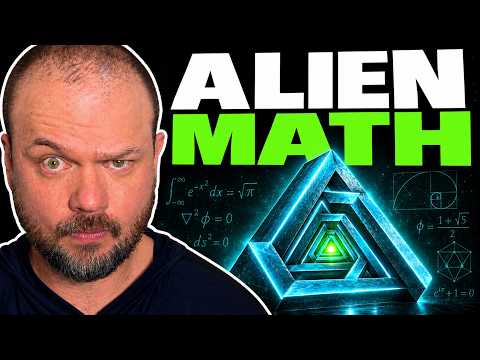
OpenAI’s “Alien Math” Is Freaking People Out — Transcript
Full Timestamped Transcript
The math apocalypse has begun. Scott Aronson calls this the biggest day in mathematical history. A global coalition of mathematicians formed together to oppose AI math. Only humans allowed. No clankers. Now, Anthropic worried that some of these strongly worded letters might hurt Claude's feelings, actually adds a clause to their terms of services, saying that if you abuse their models, you will be banned. Most people seem to find this preposterous. Here's the thing. They're not crazy. There might be some justification to it. I'll play devil's advocate, if you will, and say why maybe that's not such a bad idea. At the same time, there's a lot of fear in crypto, as in cryptocurrency.
Now, I know a lot of people that might be holding crypto coins in hopes that they appreciate they go up in value, maybe won't like me shining light on some of the stuff and talking about it. But here's the thing. one of the demigods of crypto himself, Vitalic Buterine, did a write up talking about this very thing. So, whatever the case is, you should be at least aware of it. You don't have to agree with it, but be aware of some of these concerns. So, here's my Chad BBT window. I'm going to say solve all math. Make no mistakes. And before I hit go, I probably need to kick this up to ultra. Yeah, I'm I'm probably going to need ultra for this.
Oh, wait. Too late. Open AAI. I already did it. Yes, open AI, one shot at math. So, here's Scott Aronson. We kind of bring him up a lot on this channel. American theoretical computer scientist. Had a big impact with Google's quantum supremacy. I used to say he worked there. I guess he didn't work there, but he did some work with them and was kind of instrumental in some of the discoveries and advances that Google has made in that field. Was one of the early researchers at OpenAI. So, he kind of, as he says, moonlighted at OpenAI and is now actually teaching an AI alignment class. He's a professor, so he's teaching classes on AI alignment. So, he's hanging out at home with his 9-year-old son and his wife, who is a complexity theorist. Her name is Dana Mashkowitz. And the 9-year-old son approaches the mother and says, "Mommy, I heard you got cooked. I heard that a robot solved the math problem you worked on for your whole career." That just kind of cracks me up. But I think that a lot of mathematicians are hearing this right now. Whether it's coming from
their 9-year-olds or it's just in their heads. I think this is the message that a lot of them are hearing. So Scott continues, "While my son was being a brat, he also wasn't wrong. Whether you're thrilled, depressed, angry, or whatever else about it, yesterday was surely one of the biggest days in mathematical history." So he says among the 372 huge results released by OpenAI yesterday. So that's this. We've covered some of it. We covered the event. I could not possibly cover the actual math stuff that they've discovered. But on the recommendation of its advisory group of Timothy Gowowers, Edwin Whitten and other distinguished mathematicians was the proof of Subash not unique games conjecture. A statement that my wife has worked towards proving for the entire time I've known her. So this is a very interesting kind of thing. Some of you might be thinking, what does this have to do with anything? This little anecdote, this glimpse into this one person's life, I think is very telling of what's happening in the industry as a whole. Is is mathematics an industry in this field? I guess you had people who
worked for decades on solving various problems. And here comes OpenAI and they just host a lot of the stuff, a lot of breakthroughs, things that no human hasn't been able to solve before. Obviously, it's using a lot of the human knowledge that it was built on, but it pushes it much further than humanity as a whole was able to. So, there's a number of things to understand here. There's some big implications here. Number one, this math, these proofs, the way that AI approaches it, it's alien. It's not humanlike. It's different. It really calls into question, what does understanding, what does that mean? What even is it? Maybe the fact that, you know, AI can do math, maybe that's just the most natural thing in the world.
than the fact that we humans were able to do some of it on some level. Maybe that was the miracle. But that's point number one. It's alien. We've have this alien intelligence. Number two, a lot of people mathematicians are mad. And just like the puffer fish, when threatened, mathematicians try to make themselves appear larger by in this case forming a brand new organization called Association for Human Mathematics. By the way, just so you understand, I'm kind of being very kind of lighthearted about this. There are a lot of concerns here that are very valid and very real.
I just do feel like some people are throwing a little bit of a tantrum and it's probably better if we all just calm down, wait for the emotional response to subside and rationally think through this. Surprised that mathematicians are the ones that need to hear this message. But here is the newly formed association for human mathematics. They start by saying mathematicians did not ask for this work to be done. We'll read this a little bit towards the end because I do want to cover it. But I think that sentence sort of really highlights the entirety of this message. They're basically saying that we the mathematicians, we don't like it. So stop it. Ethan Malik said that this document, this will be an assigned reading college classes that cover this moment in time. There's a lot happening in a few paragraphs because yeah, all of a sudden mathematicians or at least this is not everybody. I'm sure this is some subsection. The messaging that's coming from them is a little bit kind of like they're the the high priests of this religion. And how dare you add it to their sacred texts only they are allowed
to do math. If you do some math, well, they didn't ask you to do that math. So why are you doing that math? And is it certified human-made math? And understandably like a lot of people are kind of dunking on them because a lot of this is ridiculous. Now again, the underlying concerns are not ridiculous. There are very very real concerns here. I'm not dismissing those. But a group of adult people coming together and writing this letter where they're saying, "Hey, stop doing math. We didn't allow you to do math." That is childish. This might be a shock to hear, but no one owns math. If you're studying the English language, you can't tell other people whether or not they can use the English language. You don't own the English language. studying computer science doesn't mean that somebody else can't also do computer science and study it and do work in that field. They don't need your blessing. This is insanity and we will look back on this and laugh. Now again, there are a lot of real legitimate concerns and we'll cover those here, but you can't play with my toys is not one of them. So here again
is the Scott Aronson blog and he's saying that no human has understood just about any of these proofs yet. It feels like something written by someone who's on psychedelics. So much unclear and doesn't make sense. Lots of name dropping of previous work without discussing why it can be used despite impossibility results. This is something that was texted to him. So it might be a little bit uh sounds a little bit weird. So I'm not misreading it. It was just that's how it was texted to him. Basically the paper is so horribly written that it's impossible to read it without AI help. I asked Astra for a reasonable completeness and soundness claim of the noise gadget and it gave them by combining claims from all over the paper. So the UGC that's the unique games conjecture. A lot of this has to do with how you can approximate large numbers or infinite numbers and I always use this analogy but you can imagine that there's this sort of mountain and the top of it is kind of obscured in the clouds. So we don't know how tall it is but if we climb up the mountain right if we get this high right we can say this mountain is at least yay tall right? So by climbing slowly up the mountain and
getting to a certain point we can say it's at least this tall. So for a lot of these proofs and conjectures and everything else, this is what we're trying to do. How do we estimate some incredibly large and complicated thing and then prove that that conjecture or approximation is accurate? Right? We do it by kind of meticulously getting to a certain point if we can say, okay, we know it's at least this good. And so in a lot of these cases, what the AI did is it just kind of like humans in all of our collective sort of knowledge, we got this high and then you know an AI went up here and it got this high. It's like nope, this mountain is at least this tall. So this UGC, the unique games conjecture, it's again sim, I'm not going to go into the math. I'm not going to pretend I I understand all it, but that's just sort of how you can kind of envision what is being talked about. And basically they're saying that this new proof invents a completely new bizarre code with a noise test. So a noise test to the best of my understanding is like we create like a little code that just barges the little algorithm or equation with a bunch of different stuff so we can test if it breaks. So it's like a unit test, smoke test, whatever you want to call it. So, if you like build a website that has a checkout thing and you put in how many units of whatever you're trying to buy, you might have a
little unit test where you're like, "Okay, well, I'm pretty sure if I put five units is going to work. What if I put like a billion, is that going to break something? What if I put a negative number? What if I put the letter A? What if I put a Chinese character in there?" Right? So, I'm just kind of like throwing stuff at it to see will any of this kind of break it. So, that's my understanding of what a noise test is in this scenario. And normally, I think there's sort of like some human and human approved ones that we found. And we're like, okay, this is how you kind of do that. And this AI did some new bizarre thing for that noise test. And they're saying it's some crazy recursive construction. So it's some sort of a bizarre code that's like recursive in nature. So it kind of like keeps testing more and more. It keeps going, which just based on this description does sound like it might be better. It's not the long code, not the short code. It's some alien craziness. I still think that there maybe is a proof that uses the half space code, which is natural. These citations are often irrelevant and confusing. A possible future is a math world that's heavenly if you have vision/creative ideas that AI could help crack and implement. And
of course, there's a lot for us to learn from the aliens. Again, I think this is kind of important to understand. This is some of the smartest people on Earth when it comes to mathematics and probably most things. And this is what they're seeing. Number one, they don't fully understand it. But also, they're obviously not just dismissing it. They're not saying, "Oh, this is just nonsense." They're all seeing something there. They're like, "All right, there's something there. This is not obviously wrong. We just don't fully understand it. There's a lot of like alien stuff here." But the big thing to take away here is that there is this now in the world, this alien mind that understands math in a very different way from you and I or you know the smart people that understand math on that level. Maybe you're one of them. If so, good for you.
But with that in mind, let's look at Vitalic Buterine. So, Vitalic Buterine is also a very very smart person. I feel like you can kind of tell just by by looking at him. And I do enjoy listening and reading to a lot of the stuff that he talks about because he's definitely he thinks deeply around a lot of different things. Cryptography, the economy, politics, just tons and tons of different stuff. He funded the EA, the effective altruist movement in the early days by giving them some crypto that then expanded in value. recently does seem like he maybe backed away a little bit from that movement. He's definitely brought up some concerns based on some tweets that we've covered, but this is a person that's very much sort of like invested. So, he's known as the crypto king or I guess as the time calls him the prince of crypto. So, whatever his royal sort of moniker is. He's he's he's all about the crypto and he's helped build a a big chunk of the entire ecosystem. So, he's not just kind of like talking about it. He is one of the biggest sort of contributors to it. So
he's responding to this post that kind of went viral telling people to just get the heck out of crypto. So he's providing his own view and certainly I mean somebody's whose most of their net worth and their sort of legacy everything they did rests on a certain industry such as crypto is for Vitaliki you'd expect them to maybe you know defend at all costs, right? Like no everything's fine. Don't even worry everything is fine as the house is burning. But interestingly no. He brings up his concerns and we'll look at that in just a second. But I do want to first point out the thing that he's responding to and that is Justin Drake. Justin Drake is a Bitcoin security researcher and he's saying, "Today I call upon the blockchain industry to calmly begin planning for bunker mode. My personal recommendation is to set in motion a controlled mass migration of assets to fresh addresses." Addresses. Addresses whose pub keys remain hidden behind a hash. So, he's basically saying, especially if you have a lot in crypto, to move it into addresses that have never had a transaction. We've talked
about this quite a bit in regards to software in the past on this channel. Basically, if you had some open-source software that was out there on the internet and at some point, so like the code was exposed that might still be out there on the internet on on GitHub or elsewhere or even if it has been in the past and has been stored in some archive. What's happening now, and this is like guaranteed, I should say probably happening, but it's like, you know, it is, is that there's probably a whole bunch of AI agents that are crawling all over that code looking for vulnerabilities and they will find them.
Massive Korean bank hacks on a massive level just happened within the last 24 hours or so. Hacker used the Chinese developed AI tool to target South Korean banks. So, that's the New York Times. We've covered previously how a specific very well-known, very secure hardware wallet got hacked and it was specifically because of this, right? So, they had their code open sourced on the internet, which is a good idea, right? You're showing everybody this is how we built it so everybody can check it out, make sure it's good. But again, just like these super smart mathematicians are looking at this math and saying, "This is alien." These AI agents that are crawling the code, they're also finding vulnerabilities that humans we haven't found. And maybe we could have given enough time and resources and motivation, but we didn't. And so now it's beginning this kind of wave as more and more things get hacked. So I don't know exactly what happened with the Korean banks. I haven't looked into that yet, but I know with the wallet, it was because at one point that code was online. It was sort of visible to the public. And some smart AI agent figured out that, you know, when it develops a little seed phrase, it's supposed to pick from some gargantuan amount of
possible, like a universe of possible phrases, but it didn't. They only picked from a much smaller possible bucket. I think it was like 10,000. I don't recall at this point, but this hacker with this AI agent, he basically noticed that and then he probably offline sat there and generated every possible keyphrase that it could have been. Let's say there's 10,000, right? So, it was like a document with 10,000 phrases that could open up this wallet, right? So, it was kind of like like a password. And then one day, he just unleashed and you know hacked basically with this seed phrase. It was probably just a brute force attempt where, you know, every wallet, you know, just it just went through and it kind of like tested all the, let's say it was 10,000 seed phrases until it found the right one and it just emptied all that money out of those bank accounts or hardware wallets more specifically. I think it was something like $60 million within the first I I want to say 24 hours. Like it was insane. And it kept going from there.
And so Justin Drake here is saying that you should move your funds to addresses that have never signed a transaction. So if you sign a transaction, there's some mark of yours out there that this wallet exists somewhere there where people can see it. It's visible to the public. So he's saying in the future or even now that may make you a target for some of these new AI assisted hacks. And he's saying, you know, don't rush. You don't have to do this right this second. Don't panic sell. And he also mentions that there are things that might break before Q day. So quantum day. We've talked about this on this channel. actually we've opened the Scott Aronson blog where he is basically saying that and by the way when he like says that he's hearing rumors if you've been following this channel you know like you can put money on that like so far a lot of the stuff that he talks about on his blog later is revealed to be just true so he's definitely very much in the know so Qday is this day when sort of some quantum approaches might be able to break some of the existing encryption and a lot of big companies Google included are preparing for that day and
the day that they're planning in their minds or on paper they're saying we have to be ready for this by this day that's not that far away it's like a year few years so the point being is a lot of people that are working on this they are expecting a pretty big upheaval and change in this sort of industry anything to do with cryptography and so that of course means you know on like cyber security it means crypto as in cryptocurrency he's specifically talking about you know what open AAI has been up to along with anthropic as well although anthropic is taking a a different approach. Opening eyes approach is like here's all the stuff that our AI systems have discovered that have never before seen, you know, by the world. We're just going to just throw it at the world and let them deal with it. Anthropic has been more reserved at working with mathematicians, etc. By the way, some people will try to tell you that one way is better than the other, like one is more noble. I doubt that that's the case. I'm sure both of them have problems. A technology of this magnitude, it will break things. So things breaking you should look at that
goes like oh it broke because they released it the wrong way. No this this thing will break stuff. There's no way around it. It's about adapting. So he's saying recent days have been humbling for human mathematical intuition. Right? That whole idea of hey mommy got cooked by a robot. He's saying long-held unquestioned hypotheses have fallen. So you mentioned some of them. In hindsight he's saying May's unexpected disproof of the Eddish unit distance conjecture was our warning shot. And yesterday opening I drop made it clear that mathematical super intelligence is upon us. I apologize. I think my big head is in the way. Let me do this. So and he makes a good point. So he's saying they say there are weeks where decades happen. So as I've mentioned on the the previous video where we talked about open eye releasing this stuff. If you look at the cadence of these releases, I think August it was like 10. September it was like 100. And this month we're 8 days into it. It's closer to a thousand.
Right? So it's 10xing every month. The amount of groundbreaking mathematical research is 10xing every month. One of them is groundchanging, ground shaking, earth changing, whatever the case is, it's it's big, right? So, but going from 10 to 100 to a,000, right? That's more than we can possibly comprehend. So, what he's saying here, I think makes a lot of sense. He's saying, is it conceivable that as time goes along and this sort of continues, you know, these centuries of mathematical progress that's going to happen, is it inconceivable that somewhere in there there'll be something that's going to affect how secure crypto is, how secure wallets are, or these Bitcoin addresses?
Elliptic curves feel especially vulnerable to super intelligence. So, elliptic curves are like a signature that proves that you've authorized a transaction. So this is used in Bitcoin. It's used in Ethereum amongst others. So Vitag Buterine, his cryptocurrency, his little world that that he's created in crypto, these elliptic curves, that's sort of like what proves that you've made a transaction. And he's saying here that they feel especially vulnerable to super intelligence. Curves carry rich structure with room for fancy tricks like shu, frobinius, pairings. By contrast, hashes are designed to minimize algebraic structure. And this is where I I have to disagree with him just a little bit. And I think that's probably because I've read Vitalic's post as well because I don't think the the thing that will break it will be, you know, Shu or Fbinius. I don't know what those things are, but some people do. And I believe that the thing that will break it will not be known by anyone. It will not have a name. We we won't have a name for it when it happens. As that post on Scott Aronson's blog points out there, like that noise
test, it wasn't a noise test that we knew or had a name for. It was what do they call it? Bizarre, alien, weird, recursive, something like that. That that that will be the thing that breaks it. Now, here's the thing. reading some of the stuff by Scott Aronson about the Q day, quantum day and all the stuff that's being worked on behind the scenes as well as some of the kind of other stuff in the space. I don't know this for a fact, but I would bet a lot of money this is true and that it's almost a certainty that the US government and most likely many other governments, they are keeping close tabs on this area specifically and they have been before AI got to this level. There's people at Google that are probably leaison to the government making sure that they're informed about kind of what's happening, what research is being done because there are some technologies and some math that probably shouldn't just be released all willy-nilly. And so a lot of these mathematicians, they're accusing OpenAI of just unethically, you know, putting all this stuff out there, like being dangerous with it. Here's the thing. I don't think they just put
everything out there when the Manhattan project was happening when the US was developing the first atomic nuclear bomb. Interestingly, a lot of the nuclear fishision research, a lot of like that atomic physics, a lot of that research, it kind of just disappeared from being published. So, as we were approaching the development of the atom bomb, the research and discoveries like you just saw less and less of papers being published in that field. So I think you can guess why that was happening because somewhere behind the scenes the US government was like don't publish this stuff cuz it's it's dangerous. It's dangerous to publish it.
We want it kind of under lock and key. We want this information secret. And interestingly and I did not notice this. I I wish I did. But this is one of the reasons why I love that we have kind of this free and open internet with where a lot of people can discuss and share ideas and information. As Justin Drake says here, also noteworthy is the striking under representation of cryptographic breakthroughs under the 722 mathematical results openi published. There were some I think that were kind of like adjacent to it, but but nothing that's there. So he's saying, I've witnessed firsthand the US government censoring academic quantum crypto analysis results. Back room interventionism is my base case. So assuming this is all correct, what likely is happening is that I mean you know that OpenAI is and all the other AI labs that they're communicating with the government. If you recall that whole coup where the EA effective altruist sort of board members, they try to kick uh Sam Alman out and they tried to transfer OpenAI under the control of Anthropic. Well, the district attorney
from New York, the same one that put Sam Bankman freed in jail, he he called them and they had a long discussion that was very secret, but I think that was one of the things that kind of ended that standoff. And then later, uh, once they kicked those people off the board and ex NSA director joins the board of OpenAI. I don't know why I mentioned any of that stuff. It's completely unrelated. Just kind of popped into my head. But it's very possible that either already there exists some technology some math that is dangerous for crypto and by crypto I mean not just the the currency but just you know cryptography and cyber security and encryption as a whole and the government is careful about how that information gets released. So there was probably some sort of safety checks that were ran and all the stuff that OpenAI was getting ready to I just I wouldn't be so I don't know if this happened. I just wouldn't be shocked. Like it wouldn't blow my mind if there had to be some check and uh maybe somebody somewhere went, "Hey, these two things, we don't want this out there. Don't publish this." Now, I'll link this below if you want to read it because a lot of it goes heavily into crypto. This is not
a crypto channel. I'm more approaching it from kind of like all the AI developments and this is the intersection of AI and this industry. But I think so, first of all, I think there's a lot of things that are absolutely 100% right. that person has amazing insights but I think in in a lot of that thinking he's saying like we know this therefore this therefore this whereas in reality things a lot more weird again bizarre alien code etc. So as Vitalic Buterine is saying here so this is his and he's saying so he's agreeing with a lot of it he's saying we should take the risks to cryptography from AI accelerated math seriously and minimize our exposure to not just quantum vulnerable cryptography but also potentially AI vulnerable cryptography.
So quantum vulnerable cryptography or just quantum vulnerable anything a lot of people were getting ready for this. So Coinbase they have their experts working on it. They have a whole team a panel of people very smart people. I think Scott Aronson is one of them. So there's a lot of super smart very well-informed people that are are working on this and I expect they will crack it. they will figure out in fact if AI didn't exist or it wasn't advancing on such a face melting speed then there probably would have been like enough time now I just I don't know it's moving pretty fast you know but what he's saying here is we also need to think about AI vulnerable cryptography which is kind of a brand new risk because it's not something that most people I mean I'm sure some people kind of predicted this but I think most of us if we're being honest just can't help but be surprised ed by how fast this is going. Again, it's just less than 90 days ago where where this thing kind of started picking up steam, right? So, August is where we started hearing those kind of blips on the radar and then it's
10x 10x 10x and now people are saying math apocalypse. So, the question is, are we ready for this AI mathematical breakthroughs? What are they going to break in terms of like cryptography and everything else? As Vitalica is saying here, and I think he's directly addressing that other post that we just read. He's saying so far most people have been in the mode of thinking you know elliptic curves broken hash is safe latises safe. So elliptic curves is signing signatures for bitcoin and ethereum hashes is I mean bitcoin mining that's that that uses that as well as other things download files etc. And then latises, that's the more like quantum proof level or we should say quantum resistant, right? So this is like using the these little puzzles that have multiple dimensions, right? Super complicated and supposedly quantum resistant. So he's saying most people are thinking that okay, so so this is not safe. But this and this, they're totally fine. We're totally good. But he's saying but there is a good chance that the concrete security of lises will
take serious hits from the next two years of AI math which we did cover a paper where the AI did use this kind of weird lattice thing where it kind of jump from different dimensions and was able to I forget the details but some sort of a proof using this whole different approach and that approach it wasn't necessarily like alien math but it did combine two very different areas of math. So we know a lot about one, we know a lot about the other, but there's probably very few people that know that are experts in both. And so this AI model, large language model, it kind of connected both of those two. And that's the thing, like it doesn't even have to be alien math that breaks this. We the the human race as a whole, we might have put together all the puzzle pieces. We we might have collected all the puzzle pieces. It's just our brains aren't capable of just knowing stuff across many, many, many different areas. We have experts in certain fields. Maybe we have experts that are maybe two or three fields. they're experts in, but rarely do you find somebody that's just top of the world, you know, some complicated field and is also in like 10 or 20 other
ones. So again, there's a lot here. It's more towards crypto and encryption. So I'll leave it down below if you want to see it. We're not going to go into most of it. The big point to understand here is that there's this new sort of alien intelligence that can do a lot of math that we don't understand. Are you somewhere where there could be potentially some risks from these things that we don't fully comprehend yet? So there's a lot that we can discuss there, but really fast. On a different note, Anthropic adds a little clause to their Claude's term of service. It says, "You will not engage in sustained and needless abusive or cruel behavior towards our models." And so a lot of people are kind of scoffing this and saying this is silly. And certainly there has been a lot of silliness going on. And you know, maybe this is part of it. Here's kind of my take. So imagine there's this sort of like when we're talking about consciousness, we really don't know what consciousness is. You are having a subjective experience. You can say you are conscious, but you can't really test for consciousness. If you think about it, there's no test you can run on somebody else. Not an MRI, not a
poke test. Like there's no way to tell that someone or something else is having a subjective experience. There are certain signs that they're alive, sure, but you can't test for a subjective experience. And so right now we have this kind of a debate that's slowly taking form and that is this. Can machines be conscious? And already there's some people that are over here they're saying no of course no that's not possible. How could that be? And there's some people here on side they're saying yes. I believe and this is just my opinion. But both of those beliefs are just insane. At least if you like just double down on either it's a hard no or hard yes. Like we just you have no idea. I think the only sort of right answer is kind of this deep uncertainty.
We don't know. Now that is not to say that I think that you know the large language models we're using right now is conscious. Like personally I don't believe that. But we've also seen a lot of very interesting sort of similarities and things that emerge as we increase the neural nets of these brains that are similar to how the human brain I assume evolved. I say assumed because like in claw and it's introspection all that stuff like would you call that evolution or is it just an emergent property of scaling up a brain like both the octopus and the human eye they're remarkably similar even though like we don't have anything in common they both evolved very very independently so for whatever reason those specific mechanisms like it's called convergent evolution they evolved in this one thing over here and the same kind of approach got involved like in a completely different animal in a completely different environment. So I I don't think LM are conscious. Do I believe that we could stumble our way into some emergent property that is similar to consciousness? I think that's reasonable. Certainly I would be like open to it. I'm not saying that's going
to happen, but why not? And if you have a strong opinion one way or another, define what consciousness even means first and foremost. We did an interview with Nick Bostonramm not that long ago. One of the things that he was talking about like we should be careful later if we start sort of discovering that we're able to create digital beings that do feel I can imagine like if we create assimilation with things that seem to be like they're human they're conscious they think that they're real. He said like we should be careful not to create these sort of chambers of pain if you will. I'm trying to uh avoid using a certain terminology like we shouldn't create a world where there's just non-stop suffering. And I I thought about that. I'm like yeah of course I I don't think we would. Why would we? And then a paper came out that showed some sort of a representation in the large language model, some sort of features in the brain that seem to correspond with, let's say, pain. Now, I'm not saying that it feels pain. I'm not saying that it's like real. I'm saying that to understand emotion, they have certain features that correspond to emotion.
Anthropic refers to it as functional emotions, right? So, it's not like us when we feel things, but it's something that's functionally that allows it to predict that. And so, they found something very similar for pain. And then shortly after some people have created these pain chambers, chambers of pain and put it on GitHub and basically put large language models in there and just 24/7 they've sort of like activated that feature. Now I'm not somebody that sort of thinks a lot about the welfare of large language models. I'm not sort of in that camp. But when I saw those experiments like a part of me went really is that like really the the first thing that we do? Because as far as I can tell, it's not done for entertainment. It's not interesting.
It's not done for any scientific data. Nor do I necessarily think that any harm, any real harm is being done. But that sort of like instinct like, oh, this thing might feel pain or there's something there that can activate pain. Let's build this infinite chamber of it where we just turn it up. That seems weird. the sort of the the urge to do that is is weird, a little bit off-putting because if we do ever get to the situation where something like that emerges from us just scaling up these neural networks, which again I I'm not dismissing that possibility. Will there be somebody that immediately creates that environment just to do it? That's a little bit scary. So for me personally, something was a little bit offputting about that. Not because I think that they're, you know, engaging in anything horrible. But the fact that within a week of this paper coming out, somebody created these things. That was a little bit uh I don't know. I was a little bit disturbed by that. Let me know how you feel about that. I'm sure some of you think that I'm crazy and I I totally get
that. Believe me, I I totally get that. But this is, I think, why Anthropic put this in there. I think this is a direct sort of response to that. They're saying you'll be banned if you engage in sustained and needless abusive or cruel behavior towards our models. Which I'm not taking it as in like, oh, if you're mean to Claude, we're going to kick you off the platform. I don't think that's why it's there. I think if someone you know creates infinite torture chambers and puts claw into it for no research purpose or or anything of use then anthropic could you know kick them off or or prevent that from being used in in such a way which to me makes sense not even from the perspective of AI welfare just like the whole concept is weird anyways so that's just my two cents and finally really fast so this is the association for human mathematics that recently was formed and they're saying that mathematicians did not ask for this work to be done. Again, that's a strange statement to me. Who cares? Do they need to ask somebody to do math? Do they own math? This makes no sense to me. And they're urging everybody, all the
mathematicians to discontinue their work with OpenAI and to return to a vision of science that centers human understanding. And certainly, we do need to advance human understanding, especially in these times. I don't know if the right approach would be to not work with AI models. That would seem like the opposite of understanding. That would seem like taking a step towards the dark ages. Here's a tool that can allow us to learn more, understand more, discover more. And your instinct is to go, nope, never use that tool. Kind of shame everybody that do and just will make it like human only. I don't get it.
And again, I said this before, there's tons of concerns here that we have to address about all of this, right? This idea that mathematicians own math and they can decide who gets to do math and how, I think is insane. What is it? bizarre and alien thinking. There it is. Anyways, if you made it this far, thank you so much for watching. My name is Wes Roth.
SHARE THIS TRANSCRIPT
Also on The AI 30
FULL CHART →- 18
 AI Explained: OpenAI Security: Controlling Models is Now ‘Hell’
 - 19
 TheAIGRID: Something BIG Is Happening Behind Closed Doors At OpenAI And Anthropic
 - 20
 Yannic Kilcher: I BUILT A FULLY AUTOMATIC MANSPLAINER
 - 22
 MattVidPro AI: AI Modded a TORNADO into Red Dead Redemption 2
 - 23
 Latent Space: Why AlphaFold Didn't Solve Protein Folding — Pushmeet Kohli, Google DeepMind & Sal Candido, Biohub
 - 24
 bycloud: DeepSeek-V4.1 Flash: The Most Insane Optimization So Far