YOUR RICH BFF · SEPTEMBER 23, 2026
The One Thing Every Investor Needs to Understand Before Touching an IPO | Networth & Chill — Transcript
Full Timestamped Transcript
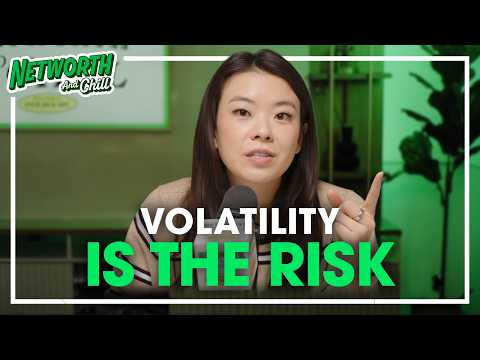
Big whoop. SpaceX went public. Why should you care? IPOs tend to generate a lot of hype. SpaceX's opening has stayed in headlines for what feels like ages. You probably recognize the term IPO because of it. So, what's the key takeaway? One thing and one thing only, volatility. If you're trying to cherry-pick a single company where you invest in the IPO and it helps you get rich quick, you better have a strong stomach and a stronger plan B in case it doesn't work out. Because with high potential reward comes high potential risk. Support for Net Worth and Chill comes from Google Gemini. Hey besties, real talk. Starting college feels like getting thrown into adulthood with no tutorial. Suddenly, you're living on your own, figuring out how to juggle your new classes and responsibilities.
And wait, [music] I have a research paper due next week? Don't get me wrong, you can do this, but having a little help from time to time goes a long way. That's where Google Gemini comes in. You can use Gemini to help you create an individualized weekly schedule so you can stay on top of your new life, submit that paper on time, and still make it to the orientation barbecue. As a student, you can sign up for a full year of Google Gemini Pro plan for free. Visit gemini.google/students to claim your free student offer today. Terms [music] apply.
>> [music] >> Okay everyone, strap in. We're going to Mars. Or at least Elon Musk thought his SpaceX IPO would finally take him there. What's up everyone and welcome back to another episode of Net Worth and Chill with me, your host Vivian Tu, aka your rich BFF and your favorite Wall Street girly. That's right, today's episode is all about IPOs. Okay, so to kick off the episode, what even is an IPO? IPO, initial public offering, kind of sounds like a sacrifice to the gods, which in some ways it is. If the gods were the general public and the sheep being sacrificed was stock in the company.
It's actually pretty straightforward when you get to the heart of it. An IPO is kind of a coming of age for a company. It's Bar Mitzvah, it's quinceañera, it's a way of telling the world that the company is doing well, it's willing to share its profits with more people, and it's ready to accept more investors so that it can keep growing. In basic terms, it's going from a private company to a public one. And quick refresh in case you are very new here, very simple caveman definition, private investments, you not allowed. Public investments, you are allowed. While there is a specific singular day that this move to public trading happens, for example, for SpaceX it was June 12th, there's a lot of preparation that leads up to a company being ready and approved to do so. And a lot of rules and procedures in the days and the weeks following, both for the company and for the investors.
It starts way back, way back when the company first has the idea to go public, which can be years before the actual IPO date. Shein first started talking about it in 2022, and they still aren't quite there yet. Now, why would a company want to IPO? There's three primary reasons. One, early investors in the company want to cash in on their investment and going public allows OG investors to sell their shares to the public. Two, the company wants a more readily accessible form of capital to help them finance investments in technology, infrastructure, hire more people, acquire other companies, aka need money for grow. It's usually a lot easier to raise money from public markets than private ones, so this essentially opens up the bank of you and me for these corporations. And three, marketing. While financial reasons often lead the desire for an IPO, a big splashy marketing moment is also a desirable outcome that can help boost business assuming all goes well. I mean, come on, those photos at the New York Stock Exchange, very cool. So, how does the process go? The first real concrete
step is securing advisors. The most important of which is an underwriter, usually an investment bank. That is the link between the company, the SEC, the Securities Exchange Commission, and the public. But companies don't just pick a favorite bank. They like top-notch PTA parents host a bake-off. This is a fun little Wall Street term, which means a bunch of banks will compete to win the right to help this company go public. All the banks will provide their POV on valuation, aka what the share price and number of shares should be, why investors should invest in a company, overall market recon, and timeline.
Given the monstrous fees the banks stand to make if they can win the business, some bankers even go the extra mile. Morgan Stanley's top tech banker famously drove for Uber as a moonlight gig to endear himself to Uber's management team. Because nothing says, "I know your business." like, "I actually have worked for your business." Unsurprisingly, Morgan Stanley won the top underwriting spot for that IPO. That said, this isn't a winner-takes-all game. There are usually a couple lead underwriting banks, and even a few additional banks that serve a supporting role. For context, SpaceX had 23 underwriters in total. Everybody wants to get a piece of the pie, and this group is called a syndicate. They're the ones that will buy the stock the company is selling in order to sell it to public investors. Soon, more team members come aboard. Lawyers, CPAs, and SEC experts all lend a hand with the audits, regulatory filings, and marketing road shows that lead up to the big day. The final piece of the pre-IPO puzzle, determining the rule for investors who
already own private stock in the company. Up until IPO, a private company is funded by private money. That could mean venture capitalists and private equity firms. These two options usually invest giant amounts of pooled money, as well as individuals, aka company insiders who've put their own personal money in the business, or high-net-worth individuals. They own private shares that are about to be converted into public shares, as do founders, employees, and potentially business partners who were paid in equity stakes, ala Alex Earl and Poppy stock. Why does this all matter? If all those people sold their stock on opening day, the company's shares would drastically drop and the IPO would be a huge flop. So, instead, the underwriter requires them all to sign a lock-up agreement that prohibits them from selling for a specified amount of time. The SEC demands a minimum of 90 days, but it can be up to 2 years. This allows a more secure opening day for the company, but could mean an abrupt downswing whenever the lock-up ends and all the formerly
private stock owners try to sell to make a profit. That's the rough preamble. Now we're getting closer to opening day. The stock is about to go public in a week or two, and then anyone can buy it. But, what if you want to get shares right at IPO? Or more importantly, at IPO price. To get allocated shares of company about to IPO, you'll need to submit an IOI, an indication of interest. It's basically you telling a brokerage, "I'd like to buy shares if this IPO happens." Before the deal is priced, you specify the number of shares you'd want or a dollar amount, and sometimes a maximum price you're willing to pay. An IOI is not a binding commitment though. You're not obligated to buy and the broker isn't obligated to fill it. It's a signal of demand, not a guarantee. That's why it's an indication. Submitting an IOI just gets you in line. IPO shares are almost always oversubscribed, aka more people want them than there are shares available. So, brokers will then allocate shares based on factors like the length of your relationship with the
brokerage, how much money you have with them, and frankly, sometimes there's even a lottery or a pro rata system where everyone might get a small percentage of what they ask for. Retail investors, aka regular people, not institutions, usually get a super small slice of the total shares, but most go to institutional investors, aka the big guys. Hedge funds, asset managers, insurance companies, etc. If you get an allocation, you'll typically get a conditional offer to confirm. And once confirmed, shares get allocated to your account, usually before or right at the opening trade. Woo! We've officially made it to opening day. Now, there are a few rules to keep in mind. Let's start with flipping. And no, I am not talking about the Simone Biles variety.
In finance land, flipping refers to reselling your allocation of a public company's stock within the first few days of its IPO to earn a quick profit. Seems like a great idea for these new investors, but if everyone did this, again, it would wreak havoc on the stock price and potentially the broader market. So, flipping is mostly discouraged, although not illegal, with different limitations and consequences put in place by each brokerage that participates in the IPO. These anti-flipping rules are similar to a lockup for insiders, but for people who are getting allocated shares at IPO. For SpaceX, our favorite example right now, there were some very different regulations. Fidelity, one of SpaceX's five named brokerages for the IPO, had the smallest penalty window, but the sharpest consequences. Three IPO flipping offenses against the 15-day window and you were banned for life. For life. That is a very unusual sentence.
By contrast, Robinhood was fairly forgiving. Sell too soon and you trigger a 60-day timeout, but repeat offenses saw no escalation in penalties. Another fascinating and very specific part of this process that makes each IPO unique, not all brokerages are going to sell a company's IPO shares, and those that do may require certain things from their users. For SpaceX, there were a few notable absences, including Vanguard, one of the largest investment firms in the world. If the institution that holds most of your trading money isn't selling IPO shares of a specific company, that's going to be a pretty big roadblock to actually buying in. In this case, if your money was at Vanguard and Vanguard wasn't selling any SpaceX, you weren't buying any SpaceX without opening up a brokerage account somewhere else. Charles Schwab, another one of SpaceX's five named brokerages, had a required minimum account balance of a $100,000 in order to purchase the newly public stock. And that six-figure amount had to be confirmed well ahead of IPO date. All right, so now you know how the
IPO process works. Big whoop. SpaceX went public, so did Venture Global and Carmen Holdings last year. Why should you care? Isn't this just for Wall Street aficionados? Great question. Let me give you a few reasons that you, yes you, should care about IPOs. Remember when Airbnb was a cool way to stay with real people, feel immersed in local culture, and save a little on your stay all at the same time? Yeah, those were the good old days. Then Airbnb IPO'd in December of 2020, and all we've seen since then are barren, boring, beige buildings, say that five times fast, and much steeper prices.
When a company is private, their investors are typically sophisticated long-term players who care less about month-to-month fluctuations in the business. However, when a company goes public, they have to provide progress reports every quarter and keep the shareholders happy. More importantly, they get a daily grade based on share price. And since management is graded on that share price, their focus is now less long-term and more about how to make improvements to share price as quickly as possible. That's not necessarily bad news, especially if you're personally an investor, but when you see a company about to IPO, be prepared for that to be followed by expansion, new products, user experience changes, advertising pushes, and an experience that might be less about the public customers and more about the public investors. Big business IPOs can also trigger changes in your local economy, especially if you're in a large city with employees from that company. If your neighbor worked for, say, the corporate side of DoorDash during that IPO, they may have come out
the other side with a nice payout after they sold their shares. Maybe that allowed them to move to a nicer part of town and meant you ended up with a new neighbor. If your city is filled with DoorDash employees, this may create a real economic event. Changes in the real estate market, increased disposable income going back into the local economy, maybe even a shift in the local cost of living. To give another big example, so many of Anthropic's employees who have equity stakes are expecting to become millionaires and decamillionaires that it is literally creating an entirely new pool of people who need wealth management assistance in San Francisco. Last, but certainly not least, IPOs can be a really encouraging sign for our economy as a whole. If a bunch of companies are excited to go public, you can take that to mean that our economy is healthy and growing, and it's a time when investors are more likely to take risks, which can mean new and exciting opportunities and creations. Or when IPOs become be an important warning that we're in tougher times. Be more cautious with your
spending because corporations will be too. Support for Net Worth and Chill comes from Google Gemini. Hey besties, so real talk, starting college feels like getting thrown into adulthood with no tutorial. Suddenly, you're living on your own, figuring out how to juggle your new classes and responsibilities, and wait, I have a research paper due next week? [music] Don't get me wrong, you can do this, but having a little help from time to time goes a long way. That's where Google Gemini comes in. You can use Gemini to help you create an individualized weekly schedule so you can stay on top of your new life, >> [music] >> submit that paper on time, and still make it to the orientation barbecue. As a student, you can sign up for a full year of Google Gemini Pro plan for free.
Visit gemini.google/students to claim your free student offer today. Terms apply. So now, let's move on to the million-dollar question. Should you invest in a company going public? IPOs tend to generate a lot of hype. SpaceX's opening has stayed in headlines for what feels like ages. You probably recognize the term IPO because of it or because of media buzz around a similar company's big transition. And you've probably heard a parent or grandparent or anyone who is investing in the '80s talk about them as lucrative stock options. But these days aren't those days. The '80s saw Apple and Microsoft IPO, but you'd be comparing apples, get it, to oranges trying to say that investing in SpaceX would be anything like either of those.
IPOs in those days had much more rigid bank control and much slower and steadier increases compared to the huge openings and the near immediate tumbles of this decade. We all know we'd rather be the tortoise than the hare. So stop looking at today's IPO investing like those opening day big numbers are any kind of harbinger of real or reliable success. Let me very directly answer that pressing question of whether you should or shouldn't invest in an IPO. Right now? Probably not. And the stats back me up. IPOs have been a losing bet versus investing in the broader market since 2019.
Specifically, this has been driven by three main things. One, peak valuations. The 2020-2021 IPO wave launched companies at rich multiples, aka huge valuations, amid interest rates that were nearly zero, stimulus, and speculative retail demand, leaving pretty little room for actual gains. In toddler speak, initial price so high, hard to go up. Two, a tough rate environment. The Fed's interest rate increases from 2022 compressed valuations and hit the long duration unprofitable growth stocks that dominate IPO cohorts the hardest. In toddler speak, borrow money very expensive, hard to be profitable. And three, low quality high bar. The boom pushed less than major companies public before they were probably ready, while the benchmark was versus an index carried by a handful of mega-cap winners. AKA because the overall market was driven by these monstrous Fang Facebook, Apple, Amazon,
Nvidia, Google, big big tech companies. In Tyler speak, baby companies IPO compared to big tech look bad. Instead of trying to win it big with a single company, you can buy shares of an IPO ETF, which spreads out investments over multiple companies IPOs. This diversification lowers risk. If you are truly hell-bent on finding the next Apple on its IPO date, I will give you a few words of advice. Buy into a company you are super interested in or genuinely want to uplift, so if you do lose money on it, you're at least supporting something you can be guilt-free about. Keeping your investment to no more than 2 to 5% of your portfolio, and treat them as high-risk investments because they are.
And do your research. Do you believe in the leaders of the company making choices that align with your financial interests? Where is the company's raised money going? Growth or debt payments? It is legally required for companies to file a prospectus with tons of information about their financial doings and health. So, read the actual document. If you don't understand it or anything looks sketchy, you probably shouldn't be buying their stock that close to IPO. But, if you're feeling really confident and want to move forward, by all means. Then come back and tell me how it goes in the comments. Buzz buzz, I know I keep bringing up SpaceX, so it's about time we went over what happened and is still happening. To give credit where credit is due, SpaceX did set a record for the largest IPO in history. It raised $75 billion plus another $10 billion when more shares were released called green shoeing at an original price of $135 per share, which rose immediately upon the opening bell to 150, hit 176, and finally settled at $160.95
before closing. The week after opening, shares hit $225, passing both Amazon and Microsoft for total market value. With XAI or SpaceX AI, known for chatbot Grok, wow, what are these very real sentences I am currently saying? Investors were super excited. It's a big deal that modern AI is being publicly traded. At the peak of share value, SpaceX announced that it was going to acquire AI startup Cursor for an all-stock deal of about 60 billion. Good job, SpaceX. Then, over the next month, chaos ensued. On July 7th, it was added to the Nasdaq 100 Index. That day, the Nasdaq closed down 1.7% while SpaceX closed down 4.4%. A few days later, Starlink announced price cuts in Memphis, Tennessee due to local concerns about a data center project. Big surprise given all this AI acquisition going on, and the stock price fell by 8% that day. 1 month after its opening, SpaceX shares were sitting at about $145 each, down from both its opening day high and significantly from its all-time peak. By the end of July, SpaceX was
trading at roughly $108. But, as of this recording, it's back up to roughly 140, even after some of the first few lockups have ended. And by the time you listen to this podcast, it'll probably be a different story entirely. So, what's the key takeaway? One thing and one thing only, volatility. IPO launches are not only based on a company's fundamentals or the facts. A lot of price action can be attributed to fear, hype, emotion, and big institutional players taking a view, good or bad. If you're trying to cherry-pick a single company where you invest in the IPO and it helps you get rich quick, you better have a strong stomach and a stronger plan B in case it doesn't work out.
Because with high potential reward comes high potential risk. If you're a buy-and-hold investor who'd rather see your portfolio go up and to the right over time, don't even worry about it. Building out a diversified portfolio that takes into account your risk tolerance and holding for decades is all but guaranteed to beat out day trading, swing trading, and taking speculative bets. I know which camp I fall into, and I hope you're making smart choices for you and yours. That said, I do still love a little good financial gossip. So, I'm going to keep my eyes on SpaceX as it's an ongoing volatile story. Keep your eyes on the headlines as new developments unfold, and we can follow together in real time to learn how this almost trillion-dollar company will perform. While SpaceX certainly had an impressive launch, but I'm ch- get it?
Cuz it's rockets. It is far from the only company with a big IPO this year. Take Bending Spoons for instance. They're an Italian software company that does something similar to the company Richard Gere's character owns in Pretty Woman, buying other companies like WeTransfer, Vimeo, and Eventbrite to make them more profitable. But, different from Richard Gere's character in Pretty Woman, Bending Spoons is, in fact, not equity fund. I mean, come on. This is literally a podcast episode about initial public offerings. That said, Bending Spoons' aggressive acquisition and restructuring strategy does make its financial and operational approach pretty similar to that of a private equity roll-up. They're those guys, the ones that take over a company and immediately fire half the employees to save money. Users love, I'm being sarcastic, them, too, because they hike up subscription and service prices. The main difference is that, unlike traditional private restructure, and plan to sell companies for a profit within several years, Bending Spoons aims to hold its acquisitions indefinitely and has a policy of never
selling an acquired business. They went public just a few weeks after SpaceX did, and while their numbers don't quite match the massive ones of Musk's company, their percentages are definitely outperforming SpaceX. Bending Spoons now stands as one of the few companies to buck the tech IPO curse. But, will that last? Only time will tell. What we do know is that they're using their investors' money to fuel their tech roll-up pipeline. You may also remember from earlier, popular fast-fashion retailer Shein is also planning to IPO this year after first expressing interest in doing so all the way back in 2022. But, they had to pull back because of Russia's invasion of Ukraine. Like I said, IPOs can say a lot about the state of the world, not just the company. So, it's always good to pay attention. Shein has filed their prospectus with the Hong Kong Stock Exchange with a valuation from the past few years of 60 to 100 billion dollars, but looking to be valued at more like 40 to 50 billion for their IPO. What's particularly fascinating about Shein is that in some ways it could be classified
as a tech company, too. Sure, they sell clothes, shoes, and home goods, but the how is what's important. Shein has mastered the large-scale automated test and reorder system, otherwise known as later, L A T R, in which it can turn around a new product in a month, record time in the fashion industry. Thousands of new products get launched every day, and replenishment is automatically triggered without needing manual approval. The company has its very own proprietary digital system that connects the entire chain of business from sampling and prep to manufacturing and product listings, all the way through reviews and product adjustments.
It relies on this model for its roaring success. So, yeah, I could argue that this fashion company is pretty techy. But, even such a powerful company can't and won't always get it right. And Shein is having such a journey of attaining its IPO that it's on its third market. The first attempt was in New York in 2023, which didn't pan out because of political pushback, tough regulations, and lawmaker opposition. London in 2024 through 2025 didn't work out, either, although this time it was due to China's Securities Regulatory Commission withholding approval. It's finally finding success with Hong Kong this year, hopefully. So, we'll see if the IPO finally happens. There are also other big buzz companies queuing up to have their turn hoping to see opening numbers like SpaceX, but actually keep them up after the first few weeks.
Most notably, Anthropic is looking at an IPO date within this year, and OpenAI has also filed, likely following along sometime next year. As I mentioned, SpaceX was hugely exciting and popular in large part because an AI company was being publicly traded. With two additional ones coming onto the market, likely all within a year of each other, what will that mean for all of them? Competition is healthy, but too much could spread out the gains. But hey, if Apple and Microsoft both IPO'd in the '80s and they're both still around in a big way, we certainly can't be writing off these AI companies just yet. But again, no, that doesn't necessarily mean invest your life savings into them. Now, let's talk about the other side of the story, whether or not IPOs are actually good for the companies that are doing them. Shein wasn't the first company to struggle to reach an IPO, and frankly, it's a really big choice for anyone.
There's quite a lot of pros and cons for companies who are heading towards going public to consider. On one hand, the pros focus mostly on growth, drastically increased funding for expansion and acquisition, a chance for OG investors to turn shares into real money, boosted media coverage and consumer awareness, and better stock incentives for potential employees. Sounds like a great idea right? Well, let's take a look at the other hand. There are some strong arguments against pursuing an IPO, even for unicorn status companies. This move to gain investment money comes with loss of control and privacy, as every shareholder will want to be considered in terms of big decision-making, which might put too much pressure on short-term gains over long-term goals.
And the company's internal finances and business strategies are now public for all to see, including competitors. It's also, quite frankly, really, really expensive. Remember those monstrous fees those banks were all vying for? There are underwriting fees, accounting costs, legal counsel payments, which is steep even if it all goes well. Going public means the company is at the mercy of SEC requirements and other financial disclosure rules, which leads to spending time and resources on making sure those are up-to-date and shared on time. That may seem like a lot of arguments against and for some companies the cons more than outweigh the pros.
Luckily for them, they can pursue a few other options if the IPO route isn't quite the right fit. Assuming they still want to go public, there are three alternatives that might just be a better road to take. One, a direct listing puts existing private stock straight onto the public exchange, bypassing the banks underwriter fees. No new stock is issued, no new capital is raised, and there's no lockup period for current owners. This is a great option for companies that are already well-known. Things like Spotify, Slack, and Coinbase all took this route. Two, a SPAC merger (SPAC) is great for companies growing at an exponential rate who want to market themselves based on future projections.
SPACs were all the rage in 2020 and 2021. The main selling point is the speed at which a company can get public. While an IPO might take anywhere from 3 to 6 months, a SPAC can be done in the span of 6 to 8 weeks since you're only dealing with one party versus marketing to hundreds of investment firms and research analysts. The companies partner with a special purpose acquisition company, which already exists on the publicly traded market as basically an empty shell waiting for exactly this moment. A valuation and funding pool are negotiated up front as the SPAC is basically acquiring the company. A recent example is DraftKings. And to also give you another example from my personal life, I used to work at BuzzFeed, which went public via a SPAC.
And unfortunately, if you look at the price chart, I think you'll see a very clear picture of how that went. And finally, a reverse merger or RTO. A private company can bypass the IPO process by merging with or buying a dormant public shell company that already exists on the market. The merger results in the private company entering the market at the dormant company's stock market listing status. It's a pretty cool shortcut, but there is a risk that the dormant company has some undisclosed liabilities hiding under the hood. Burger King did this a while ago completing an RTO with shell company Justice Holdings, but if I'm being honest, this route is pretty rare. Woo!
We covered a lot of territory here, and I can imagine your head might be spinning. Take a deep breath and let me give you the too long, didn't read TLDR. IPO stands for initial public offering. Businesses that are abundantly thriving may choose to IPO as their way of transitioning from private to public. Investing in IPOs versus an index fund has not been a lucrative choice for everyday investors since 2019 due to big IPO valuations that left little room for growth, high interest rates that made borrowing costs more expensive, and IPOs being benchmarked against a stock market led by mega-cap tech winners. Long story short, hype does not always equal gains.
While I might not recommend you buy up every IPO opportunity, following company progressions to and through IPOs can tell us a lot about what we can expect from those businesses moving forward, and can also tell us a lot about the overall health of our economy. And if you watch an IPO and buy that stock at a later time, that'll likely help you avoid some stomach-churning volatility. Thanks for sticking with me through this one. If you have questions, please feel free to drop them in the comments. If you learned something new from this episode, please consider rating wherever you're listening. It helps support the show in an easy and free way. I love you guys so much, and I'll see you next week. Thanks for tuning in to this week's episode of Net Worth and Chill, part of the Vox Media Podcast Network.
If you liked the episode, make sure to leave a rating and review, and subscribe [music] so you never miss an episode. Got a burning financial question that you want covered in a future episode? Write to us via podcast@yourrichbff.com. Follow Net Worth and Chill Pod on Instagram to stay up-to-date on all podcast-related news, and you can follow me at your rich BFF for even more financial know-how. See you next week. Bye.
More Your Rich BFF Transcripts
VIEW ALL →

Transcript FAQ
Q. Is there a transcript of "The One Thing Every Investor Needs to Understand Before Touching an IPO | Networth & Chill"?
A. Yes. This page has the full, timestamped transcript of "The One Thing Every Investor Needs to Understand Before Touching an IPO | Networth & Chill" by Your Rich BFF (5,309 words). You can read it here or copy it with one click.
Q. How long is "The One Thing Every Investor Needs to Understand Before Touching an IPO | Networth & Chill"?
A. The episode runs 29m and the transcript is 5,309 words, about a 22 minute read.
Q. How do I jump to a specific part of the video?
A. Click any timestamp next to the transcript to open the video on YouTube at that exact moment.
Q. How do I get a transcript of another Your Rich BFF video?
A. Browse all Your Rich BFF transcripts, or paste any YouTube link into the box on this page to get its transcript in seconds.
Q. Can I download this transcript as TXT or SRT?
A. Yes. Paste the video link into our free transcript tool to export it as plain text, SRT or VTT subtitles, or JSON.
Get transcripts for any YouTube video
Paste a link and get an accurate, timestamped transcript in seconds.
TRY IT FREE