RADIO TELEVISION DIGITAL NEWS ASSOCIATION · JUNE 5, 2026
RTDNA Presents In Conversation with Esther Caszo — Transcript
Full Timestamped Transcript
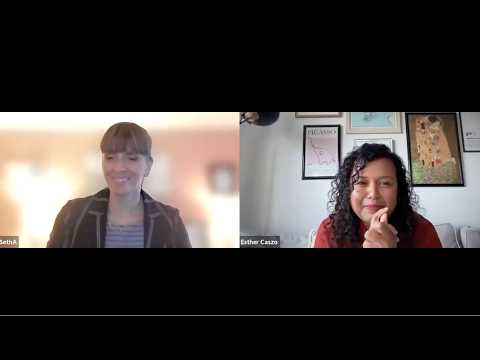
Um, okay. I think we can probably get started here. Um, if anyone else joins, then of course we will let them in. But for those that are here, thank you so much uh for joining us uh today with uh in conversation with RTDNA presents. I'm Angie Seth. I'm the president. Um Esther Casro is our guest today. uh before we kind of jump into um the conversation, uh a little bit of housekeeping here. So, um we're going to have the discussion go for about 20 or so minutes uh and then we're going to open it up to questions. So, um those that are online right now, uh feel free um at that point to, you know, raise your hand, ask questions. You're welcome to ask them on camera. If you don't want to ask them on camera, for example, but rather want to put a question in the chat, then um stick it in the chat and we will then uh relay it to Esther and uh and and she can answer the questions. But uh this webinar as well, this in conversation with will also be in the RTDNA website.
Um Esther of course will also have a copy as well. So there'll be opportunities for other people to see it as well, but for you too as well. And I hope at some point then you're getting the opportunity to watch the the short film Crybaby Cry. So with f further ado, thank you so much and uh and welcome um to uh to I guess you know another edition of in conversation with here with RTDNA. Uh I really appreciate you coming. For those that are joining us now, uh I'm going to give you a little bit of background on Esther's uh bio.
It's uh very impressive. Uh and understandably we under, you know, know why she does the work that she does, but she's a Toronto-based producer, director, and writer with over 12 years of experience across Canada. uh the UK and India. And she built her career producing unscripted television and brand content for major broadcasters including CBC's uh Dragon's Den, uh Roger City Line, and Breakfast Television. Uh in 2025, she founded um 414 Films Inc. and pivoted into fiction writing, directing, and producing Crybaby Cry. Now, this is a short film on Consent with an all female cast. Um sorry, all female crew and South Asian cast. It's screened at the ISA and the MISA as well as the can as well as Canada Shorts, the Toronto Short Film Festival. And she's currently in postp production for a short about identity, masculinity, and mental health. Esther makes uh urgent culturally specific stories that center unprecedented uh that center under represented, excuse
me, communities. So, that's a little bit about Esther. The film itself called Crybaby Cry. It follows Liz, a woman in her early 30s, as she navigates the aftermath of stealthing, an intimate betrayal that leaves her raw, distant, and uh re and struggling to reconnect with herself. Haunted by fear and fractured trust, Liz leans on a dear friend, Armaya, who sh whose sharp wit and unwaverly support offers both comfort and challenges. Their friendship becomes a vital anchor, though Liz remains caught between uh longing for sexual freedom and the shadows of her trauma. Encouraged to try online dating, Liz confronts shadow exchanges that only magnify her unresolved pain. Flashbacks blur moments of intimacy and with the violation that altered her sense of agency, underscoring the heavy societal and emotional weight of consent. The film resists neat resolution, instead closing with Liz's quiet resilience. a raw intimate portrait of healing as a messy nonlinear process and a testament
to the courage it takes to reclaim one's voice and autonomy. That gives you some background about Crybaby Cry. Um oh, we've got one person in the waiting room. I'll bring them in. Uh so I have watched the film. It is phenomenal. It is extremely powerful and although it is a short film, um it stays with you for a very long time and it, you know, um prompts you to ask a lot of questions. Um, for those that just joined in, uh, there will be time to ask Es Esther some questions, um, after our chat. So, feel free to raise your hand at that time and ask some questions. But I want to sort of get into our questions. I gave a bit of synopsis about the film there, but I want if you don't mind kind of diving a little bit deeper to tell our audience here more about the film.
>> Sure. Firstly, thank you so much. I appreciate this conversation so much, Angie. Um and uh the film is uh predominantly it is a 14-minute short about stealthing about consent. Um and uh it's stealthing. It's about the non um it's it's when someone takes a condom off during sex wii which is um you know breaking consent here. And um while the film is about consent and it's about stealthing, it's also about friendship and resilience and it's about trauma. uh you know that uh trauma and healing that doesn't really happen in a linear way.
You know, it's it's eb and flow and it's not it like like you said it it questions, you know, how one heals and whether you can actually tie something with a knee bow and like get over things as society expects you to do. Um and so, uh yeah, the film sort of came from a personal experience. Um it was an experience that I had in 2021. Uh and um to me uh first I was quiet about it and I was like you know okay this has happened how do I deal with this? I spoke to a friends about it. I did therapy. It took me a while to sort of understand that it was not my fault uh that this experience happened to me. And then in 2022 um it was deemed illegal by the Supreme Court. Um it was a case it was RV Kirk Patrick and it was um it it at that point of time I was like oh my god this is illegal do oh oh my god like you know someone can be you could take someone to court for this it's not just a a gray area situation. It's not just a me
feeling weird about an experience that I had. This is this is real. And so at that point of time I was like okay I need to tell this story. And I the best way I knew was to make a short film. And so that was our >> that revelation that vindication was that part of the motivation to to to make the film as you point out it's an extremely personal um experience unfortunate experience that you had that many I think you would agree and you did for a while like shy away from um and but you decided no you needed to do something about it.
>> Yeah it was extremely personal but it was also very urgent. you know, this is while while it termed uh you know, it was deemed illegal in 2022, it's been happening forever, you know, >> you know, and so for me it was like, well, someone's going to do it. Someone's going to say something about it. And it's so under represented and and and not discussed, you know, like when when I actually the film, like I had people saying, "Oh, there's a term to it. Oh, is this a real thing? Oh, it's still happening to women." >> So, it was a very like Yeah. all of that, you know, >> and people if people don't know that it's a crime, no one will report it.
>> So for me, it was like, oh my god, I have to talk about steeling. I need to name it. I need to call it what it is. I need to let people know that there are very little statistics on it because people don't report it. I need them to know that it it's a crime in Canada. Like people didn't know that, you know, people still don't know that. This was a small sort of step towards bridging that gap between you know um people thinking uh oh oh it was perhaps it was like you know it was misdemeanor it was you know I don't know why um he would do that or like you know you know maybe it's a you problem like that sort of thing I needed to bridge that and I wanted to break the cultural silence that uh and shame that something like sexual assault actually has and that was like one of the reasons that pushed me to really saying make the film, write it down, you know. Yeah, >> it's an it's an interesting um line um with the background that you have, the work that you've been doing um in as a journalist in the industry now pivoting over to becoming a filmmaker and wanting
to put um what very well very much can be a story in our newsrooms when when we see sort of the legality of something around this come about, the you know, the final definition or the final result or or or the final ruling on this. um what has the response been like from this film and what has it been like for you because you're you're you're kind of I guess um balancing between now sort of you know wearing the two hats. One I think more so now is the filmmaker hat um you know not so much the journalist hat but that also you take the experience of what you've done in newsrooms to and applied it here.
>> Yeah. Yeah. So, um, it was the the the the reaction was actually pretty strong and it was quite lovely. Like a lot of people were able to say that, oh, like I'd never seen this directly on TV, you know. So, the representation of that moved people and that was really nice. Like people would, you know, literally slide into my DMs and say, you know, oh my god, like, you know, I've experienced this or I think this happened to me. So, people were able to name it. A lot of people were able to to say, oh, this happened to me and it's called stealth thing. So great reactions in that sense and of course it made people very uncomfortable also you know because the film while it um is about stealthing it also is about her reclaiming herself right and so when you combine both of both of that people are like I I'm this is I'm uncomfortable you know and there were some screening screenings I remember like it the energy in in the room changed like you knew that they were uncomfortable and I was like good you need to feel uncomfortable because this is an act of misogyny you know,
>> you need to feel her pain. You need to think about your actions and the ramification of what people do. So, in that sense, it was very validating and like great reactions. I I mean, I'm I hope that this reaches more people and more people can get to watch it and call it out and then feel represented. And um for me like I think because I've worked in factual TV for so long, it's always been about pushing for stories that you know you know marginalized stories, stories about women, um things that you know chase that story that you know might be someone's lived experience but is not common enough but it needs to be told. So, I've always been that person and and I think with this film, >> I felt like, well, you've done this for so many other people. You should do this for you. You know, you should do this for all the other women that have experienced stealth thing. And so, it was a a massive step to be a writer, director, producer of a fiction film.
Um, >> right? >> You know, that was inspired by my own experience, but it was a piece of fiction. And so, that was a huge step for me. I want to touch on something that you said um just now when you said that well in terms of what the reaction was and a lot of people said well I haven't heard these stories I haven't seen something like this covered um what do you think needs to change and I'm asking you now from the perspective of you as a filmmaker having put it put this project out um or or or what more needs to be done to get journalists aware of stories like this to push harder in newsrooms for stories like this that yes, maybe they're uncomfortable. Maybe they're not as known, but they are so critical and so important when we are talking about women's rights, the protection of women, diversity, equity, and inclusion. Um, you know, uh, breaking those barriers and those stereotypes and standing up um, when sometimes that pitch can be hard to >> for your news director to go, >> okay, are we going to have enough eyes
that care about it? >> Yeah. No, I I think we need to I think so many things are deemed newsworthy >> and I think that that definition needs to change for sure and we need to be more inclusive. We need to understand that I I think what happens is with stories like this, especially about sexual assault and women. I think it it becomes it turns into like a niche story or it's a sensitive story, you know, um and it's not given like sort of the platform that it should be given, but it is a broader story. the these are broader aspects that if we don't talk about like the more visibility it's our job to bring visibility to stories like that and and to to um you know let let survivors have that space to talk about their experience and not to think that oh if it's if it's your lived experience then it's yours you know the you know storytelling and >> I think for me personally it's the more personal the story is the more universal it is you know >> right a >> and if you were not able to to understand that and and include those
stories, then I think we're failing as storytellers and people who have that sort of capacity. And I think I think media has it's able to um it it helps people understand what is real and what is rare or what is normal like you know and and it's on us to be able to push these stories forward and say this is real this is happening you know >> um I think uh globally around 25% to 30% of women have experienced they just don't report about it >> they don't think you know it's something to report about or they've been culturally silenced or they've been made to they've been made to feel like it's a mei problem. It's not it's not seen as misogyny like you know I I I think the women reacted to the film a lot. I don't know about the men because it was I I know that it was always it was like a oh is this okay like this is a real thing it's affecting you guys like it's it's one of those you know it's not >> right. So uh the gravitas is lost and you know and while you might you might know that it is you know illegal to do that there has to be a bridge with what
people what people people know what the legality is you know so in situations like that all we can do is try and push forward and like really fight for the stories we we believe in you know yeah I don't know if that answered your question but >> it did um is it important for us to talk about what's uncomfortable. >> So important. It's so important. The more uncomfortable and I think that I've realized that about me. Anything that is, you know, it's living in silence or that's uncomfortable, I'm like I'm attracted to that and I'm like, we need to talk about this, you know, someone has to talk about it, >> you know, and uh and stealthing specifically, like I literally saw just one reference of it um in the show called I May Destroy You. And it was a very small snippet. And uh when I saw that that was like the only reference I had and then of course the film that I made like I've not I don't have any other reference of it because it's so underreresented. So you know we we need to talk about these things and especially steeling and it needs to stop. You have taken this film and as as
I mentioned you've put it out on the on the film circuit. You continue to um get it the exposure that they that it needs to. What's the reaction been like um at other film festivals again where you know yeah I guess there's an opportunity to to show that level of art but in this case here you're not just showing your art you're also talking about an issue that is so extremely important and affects women all around the world. >> Yeah. Yeah. I think it was it was mixed and it was so interesting cuz like the first when the when the film premiered for me uh you know I was so nervous about it. I don't think I paid attention to what reactions were like but there were a lot of oo's and a's. I remember that and it also filmed at a it filmed it was sorry it premiered at IFSA and it was a predominantly a South Asian uh uh sort of setup and and the audience was South Asian so there were a lot of oo and eyeing and you know there was like silence there was a lot of silence you know uh and because the film has little snippets of like there's a joke here the joke there you know all these lighter moments you could tell that people went from like laughing laughing and then
real like quiet and silence and so for me that was very validating I was like okay that's good. People are feeling something. They're thinking, they're being uncomfortable. But um you know, it's it as as the film went to other festivals, I think it it it sort of it felt easy to watch it. You know, it was it was it was also art. You know, it was it was um you know what uh you know, 28 women came together and made together. You know, it was it was a film. It was educational, but it was also made you feel and it made you think, you know, and and you took something away from it. So I think there has been a growth to the way I've also experienced the film as the filmmaker and you know how like friends have watched it over and over again and you know people have watched it and have been like okay you know I saw it for the second time and it makes I'm absorbing more I understand the you know the nuance of it or I understand the um the reasoning of it and it's been a gradual sort of growth uh even for me. Yeah.
>> Yeah. No I I I I get that. Um, I get that sense and I know like when you do watch it, I think your purpose is to make the person watching it feel uncomfortable and then to question um, what exactly is going on here and uh, and and why it isn't, you know, it's you can't justify it. Something has something uh, wrong has has clearly happened. Um, what would you say to some of the journalists that are listening right now um about I guess the importance of of pushing on a story um that you know may may require a little more cell but it's again it goes back to and I I I guess I come back to the fact that in my career when I first started covering domestic violence um it was a difficult story to cover a couple of reasons. Of course, difficult in itself.
You had to be protective of anybody that you were talking to, but a difficult and very heavy story is that too heavy for us to put on the air. And then he kept pushing and pushing and pushing and then of course, you know, that that more that sort of came about of it. Um, what would your advice be to some of the journalists that are listening right now? Um, you know, about the importance of pushing the envelope. I think that it's it's a privilege to be a journalist and to be a storyteller and and I think we need to use that to the best of our abilities and it's I think that >> just with with steeling for example like I feel like you know more countries need to stand up and more countries need to sort of you know turn this into an illegal sort of crime and and UK has done that and Australia has done that and Canada's done that and um I feel like I feel like people who have the privilege and and and can talk about it should talk about it. Um not because they have not experienced it because it is a phenomenon that needs to be spoken about. This is you know why is this still happening to women? Why are they
still going through this? Why are we not able to respect each other and understand a boundary when it's drawn you know why are people uh you know running free from this you know why why don't we know more about it? I every time a person came up to me and said, "Oh my god, is that a real word?" You know, >> and I had to be like, "Yeah, yeah, it's it's it's in the dictionary, you know. It is a real word. It's it's not just something we've made up." I mean, there was a time where on on a word document, if I type stealth thing, it was it was a mistake.
>> It was a spelling mistake. >> It's not that anymore, thank God. But to me, it's like that's a question mark. Why is it a spelling mistake when this is a phenomenon that happens to people? and and to anyone who you know is is watching and and feels like okay this we need to find these stories we need to we need to be more humane about experiences of people especially women you know and I I feel like it's it's at least that's the way I I think you know I'm just like you know how can I help uh you know spread the word and be better how can we be better at at at this this life that we're living you know >> um and so like for me it's just like push push as much as you can, you know, you you will get everyone's not going to say yes, you know, it took me a while to get here. Like I you know, >> from 2021, I I finally made it in 2025.
It took me three years, you know, so it was and it was a pull and push for me because it was a personal story, but but if I didn't say it, who would have, you know, like it was it was that so it's like if not me, then who? And >> we need to take ownus for things like that because we can we can there are people who go through things like that and go through worse and can't say anything about it you know. Um so because we and because we can we should you know it's it's our uh you know it's it's uh a duty to to kind of you know stand up and and and tell these stories and not shy away and be brave. Yeah. Uh I want to I don't want to run out of time here. So I do want to open up the floor um for anyone that has questions um to you about the work that you've done. Um okay, let you know what go ahead. I'll ask go ahead and unmute yourself and um or we can get you unmuted here for Fakri.
>> Yeah. Hi. >> There you go. Go ahead. >> Well, yeah. Thank you. Uh before I actually ask uh my question, I just want to say something personal. Um Esther, uh knowing you and seeing this film actually means um a lot to me because in your own way, you helped me understand um how something uh painful or even difficult can be turned uh into something really meaningful, creative and also powerful. So you took a real experience uh something uh I believe heavy and transformed it into an art uh that can actually open conversation uh help people also feel less alone and uh maybe even heal uh other people in the same time. So that takes uh courage I believe uh honesty and um definitely a very rare kind of strength. So thank you so much for um making this film actually. So my question to you is because the film is based on uh
something deeply personal. Uh how did you protect your yourself emotionally while uh writing and directing it? >> Um thank you for the question that it's actually a great question and I I struggled with it if I'm being honest at the start. Um even when I wrote it, I didn't write it in a linear way. I wrote pieces of it and there were things that were too much to handle and then I would stop and I would keep coming back. So it was not a linear I didn't sit like and just go oh you know I have a script ready. It didn't work. It it took me a while to get there and then I had to I what happened was that when I started to talk about it about the film to you know when I was trying to to crew up and cast and I would start start with you know okay this is a film I'm making it's about stealthing. Have you heard about steelthing? And people would be like, "Yeah, I've experienced it, you know, or yeah, my friend experienced it." Or, "Oh my god, please tell me more." The more I spoke about it to people and the more I started to crew up, I realized that yes, this is the MI story, but it is also all
of their story. You know, the the film has a statistic in the end that says five women out of the 28 that actually worked on the film actually experienced it. So, for me, it was like, "Oh my god, this is not just a Liz story anymore. This is so it's a story of so many other women." And so the more I worked on it, the more I was able to detach and say, well, yes, it it the the the inception of it comes from me. But this is a story about every woman that has actually had any sort of sexual assault or experienced steel thing. And so I was able to detach. But it was a hard process. It was not it was not easy because, you know, it was so close to home. But because it was besides being personal, it was so urgent. I I had to find a way to detach and and tell the story as a story and not not make it about me. It was not about me. It started off with being about me, but at the end of it, it was about everyone that had, you know, experienced it and anyone um that will go to experience it, you know, that they have something to fall back on. Yeah.
>> Um Oh, Nicole. Oh, >> hi, Esther. >> Um when you have a story that you, you know, you you kind of think about it for years, you say that this is a story that you had in your mind for a few years. What was it that made now feel like the perfect moment to act on that story and to bring it to life? >> Thank you. That's that's actually a great question. Um, I felt I think it was an inner sort of strength and it it there was a moment where I knew that if I didn't tell this story now, I would actually never do it. Like I think it was a very guttural sort of like uh you have to make this, you have to do this now. there. This is the moment. And a lot of things worked out, you know, and I think it was also one of those like, you know, the universe I I worked on bringing it to life and the universe sort of helped me do that. Um, it also was at a time when I had actually quit
work. So, that worked out as well for me. But I think you will know deep really deep inside where when you have to take action. And it was I knew I I woke up one day and I knew that I had to tell it. I had to do it now. Uh you know, and it was like do it was a very like do it now. Do it now. Like write it. Finish it. You know, don't what what are you waiting for? You know, uh and and there are lots of things, right? Like oh, you know, I don't know how it'll received. Oh, I don't have the money to do this. Oh, you know, I don't know if I can do this. And I was like, well, if you don't do this now, you you will never do it. And so and I had a lot of a lot of encouragement and I I had the time and I also I had the time to breathe through the script. I had time to sit with it and then detach from it and say I have to do this now you know or or no one else. It was a very much like no one's talking about it. You can talk about it. You can make a film make it you know. Uh so it did take a lot of courage and uh uh a lot of strength but um but but I I knew I knew deep inside
that I I had to do it and you know I'm so grateful that I had the the capacity and found the team and found the cast and and I also think that I think the universe works that way. The moment you give it a little bit it starts to give you. So finding the right cast, finding the right crew, people saying I've experienced it and I'm like okay you know what oh oh let let's do this. You know momentum sort of grows. It's it's a kernel. You've got to start and then it it it grows hopefully. >> I love that it's an all female crew and cast. It is. >> Thank you guys for all and it seems like there was this level of support >> for everybody in the film.
>> Yeah. >> Uh any other questions? >> Anybody else? Um see if there's anything in the chats. Nothing in the chat. Um any other questions? Um I have one last one then for you. What's next? What do you what do you what are you hoping to do next? But what I guess is next for also this conversation, this film that's now, you know, spurred this conversation. >> Uh yeah, I feel like uh you know, the journey has just begun if I'm being honest and I feel like the more I talk about it, the more people will want to watch the film and vice versa. Uh I hope we're able to take it to more smaller communities and have more screenings, you know, screenings in colleges. you know, everybody needs to know about this and uh hopefully it'll find a home where it can stay uh you know, uh you know, virtually live and people can have access to that. So, I definitely hope that it finds a home. Um, and personally, you know, I'm working on uh a short to feature uh with a friend uh
you know, and uh I I we directed the first 17 I directed the first 17 pages of it and it's about cricket and masculinity and mental health and uh you know uh uh and I I think that is something that I'm working on. I want to build that and we want we're looking for funding to make that film. Uh and I'm also working on a psychological horror uh you know about inheritance is genetic code what it is what it means when it's passed from mother to daughter. Um so yeah so a lot of these are like you know they sit in silence and you've got to dig in and you know you've got to be like I'm going to get my hands into I'm going to try and understand this and you know create a world around it and and portray it and tell a story. There's also one that I'm working on about women and like bodily autonomy, you know, so very much on brand with like, you know, these stories that are under under represented and under discussed and, you know, not really stay in the cultural silence, but we need to break free and we need to break through. Yeah.
Sorry about that. had a dog dog barking there, you know, as we have with, you know, live television. There you go. Um, any other questions from anybody? >> Nope. Okay. I want to thank everybody for joining us. Um, we are going to continue to sort of build on these uh in conversation with uh presented by RTDNA Esther. Um, as I mentioned, it's an incredible film. You are incredible with everything that you've done. Um, congratulations on this. Thank you so much for giving us your time and we hope that we can have you back to talk about more of the stuff that you're doing and I think it's a really important conversation from um you know how you've sort of been able to open up your career and your skills to do and tell some of the stories that you've been wanting to tell um beyond the newsroom and uh and and so hopefully it'll be uh some inspiration and encouraging for our journalists to be able to sort of push on some of those harder stories because they are important ones that need to be told. So, um, I thank you so much. It's been it's been such a lovely talking to
you. >> So grateful. Thank you. Thank you for the opportunity. >> Okay. And everyone, thank you so much for joining us. Have the have a great rest of your evening.
More Radio Television Digital News Association Transcripts
VIEW ALL →

Transcript FAQ
Q. Is there a transcript of "RTDNA Presents In Conversation with Esther Caszo"?
A. Yes. This page has the full, timestamped transcript of "RTDNA Presents In Conversation with Esther Caszo" by Radio Television Digital News Association (6,029 words). You can read it here or copy it with one click.
Q. How long is "RTDNA Presents In Conversation with Esther Caszo"?
A. The episode runs 29m and the transcript is 6,029 words, about a 25 minute read.
Q. How do I jump to a specific part of the video?
A. Click any timestamp next to the transcript to open the video on YouTube at that exact moment.
Q. How do I get a transcript of another Radio Television Digital News Association video?
A. Browse all Radio Television Digital News Association transcripts, or paste any YouTube link into the box on this page to get its transcript in seconds.
Q. Can I download this transcript as TXT or SRT?
A. Yes. Paste the video link into our free transcript tool to export it as plain text, SRT or VTT subtitles, or JSON.
Get transcripts for any YouTube video
Paste a link and get an accurate, timestamped transcript in seconds.
TRY IT FREE