FAIR GAME BY VANITY FAIR
Sam Altman on Elon Musk, 'Artificial,' and the Future of Humanity (Part One) — Transcript
Full Timestamped Transcript
- From Vanity Fair, this is Fair Game. I'm Mark Guiducci. Every day, a new scientific breakthrough or existential threat seems to make the world more aware, more anxious, and more distrusting of an AI future that we're told is rapidly approaching. And nobody is more recognized as the face of artificial intelligence, as a technology, an industry, and as a civilizational shift than OpenAI co-founder and CEO, Sam Altman. For that reason, Sam Altman is on Vanity Fair's cover this month, and sits at number one on our new establishment list.
I sat down with Altman for two interviews in San Francisco, the first on September 11th, and then again today, October 2nd. In those weeks, the story about AI seemed to turn upside down about half a dozen times. And over the course of our conversations, we discussed everything from Sam Altman's life, his children, his rivalries, pro-natalism, prepping for the apocalypse, Luca Guadagnino's "Artificial", and whether he thinks he's been mischaracterized as a villain in society. We talked about his company, his new products, the delayed IPO, his compensation, the recent exodus of OpenAI executives.
And we talked about the technology itself, slowing down, government regulation, industry self-policing, President Xi Jinping's state visit, and protecting human life, including in the case of suicide. I should note before we begin, that Conde Nast, Vanity Fair's parent company, has a content licensing agreement with OpenAI. Both interviews with Altman are live now. This is part one. [upbeat music] Sam, it's good to see you. - You too. - We are speaking at an extraordinary time, I think, for AI, in terms of the capabilities, and the risks, and the public awareness of both.
This feels like a watershed moment. And I just want to know, Sam, what has the past month been like for you? Have you slept? Is your phone ringing off the hook? Are world leaders calling you asking for answers? Does this feel like the 2022 moment when you launched ChatGPT where something has changed, or is this just an average week in the life? - A little bit of both, to be honest. I think the internal experience of this is we have been talking about this and preparing for this for the last decade in some sense.
And we have been seeing this exponential progress. And we have been confused about why more of the world has not seen progress the way that we've seen it. Because to us, the fact that this moment would come has been very predictable. - Do you feel like you understand how frightened people are out there right now? And do you feel a need to reassure people or help them understand it? - Of course, yes to both. - Yes to both. - If you go back 10 years, and read what we talked about when we started the company, it matches this moment very well.
Now, the difference is 10 years ago, very few people believed us. Now most people believe us. Both that AGI is coming and-- - Is it here? Subjective this, right? - It's subjective. Yeah, it's close. I think you could say we've been very successful at kind of what we set out to do. And now we're going through a recalibration, and kind of like, a period where society is like, okay, this is coming. Now, society is still continuing much the same. We have this incredible new thing.
And I think it's very fair to say the world hasn't changed that much. And, you know, I think a criticism that we got, we still get, but less recently is, you said you were going to do these amazing things, and like, where's the impact on the world? Where's the economic growth? Where's the cure for cancer? Where's the this? And yet it does feel like something important is changing. We are one player of many, but we want to, you know, work with all of the other stakeholders in society. - You are one player of many, but you specifically, Sam, are in many ways, the human face of artificial intelligence.
You got there first, and you became the brand as a person and as a company. And I think it's fair to say, if it's the Manhattan Project, you're the Oppenheimer. I wouldn't be the first person to say that. And I'm curious, just what does that feel like? - I will answer that. This is not me trying to brush it aside, or false modesty or anything. But the degree to which this is a collective effort, but mostly that this is about a story of, you know, a relatively small number of brilliant scientists and engineers that did something amazing, and much less a story about me, I think is not well understood.
I think there are many people that could have done the part of this that I did, and the kind of key researchers and engineers. And I think they are recognized at this point, but it is one of the most important, and impressive, and impactful things that we've seen in a very long time in any scientific or engineering discipline. - Kevin Roose's book, the new book, does a good job of bringing out some of the supporting parts. - It is true that I got as much as anybody or more than anybody else, like the face of this whole thing, and the sink for a lot of the anxiety and fear, and everything else.
But it is a strange experience to say the least. - I think you're saying this, I will go further. I think a lot of people at this moment see AI as an evil force. And because of your association with it from the jump, you're seen as a villain. Do you feel you've been mischaracterized? Is that frustrating to you? - I do feel I've been mischaracterized. It's only somewhat frustrating. - Okay.
- I think if there were somebody else doing my job, people would have the same feelings and say the same things that probably wouldn't resonate with that person. I think it's not really about the specific person. It is that people need a sink for the anxiety, a scapegoat, just like, man, this change is happening to the world, and I need a person. - You can divorce it from how you feel about yourself. - I take it somewhat personally, but not that personally. I understand the human instinct here. I have felt this way towards other people in previous eras of technology.
I feel bad about it now, but I think I get the human instinct. - Who is that? - Well, one example of someone that I know personally that I'll talk about is like Mark Zuckerberg. I had a very evil caricature of him in my head in the early days of Meta. I didn't know him at the time. I know him not super well, but I know him now. I think I was projecting whatever people project onto someone with what they perceive as too much power and influence over the world. - Sam, you are a parent of two.
I don't have kids, but all of my friends who do talk about how having kids dramatically changes how they think about the future. I can only imagine that's truer for you as someone who probably understands our future a lot better than most, and has a unique role in shaping it. Has having kids changed how you do your job? - Yes, but probably not in the way that you would expect or maybe expect.
Having kids is by far the best thing I've ever done. I feel like very blessed to have had many wonderful things happen to me in my life, but having kids is the number one by a huge margin. It is everything people told me, including that you can't really understand how good it is, has all been true. And it is the most amazing, greatest blessing, most fun thing ever. I was like very intent on not destroying the world before having kids. I didn't need kids to be like, "Okay, I really shouldn't gamble with the future of, "or we shouldn't really gamble "with the future of civilization."
And I am somewhat surprised about the number of people who have said, "Oh, I'm really happy you have kids "because now you won't, you know, "take crazy catastrophic risk for all of us." I wasn't going to do that anyway. But in terms of, well, I think there's all these things about like the premium I put on being away from my kids or to do anything else, it's been wonderfully focusing from what I actually care about and want to prioritize in a time perspective. And then watching the way kids experience the world, and thinking about like, obviously we don't want to destroy the world, but what do we want to preserve, and what kind of world do we want to build?
And like, what are these magical human experiences, and, you know, how do we want kids to use this technology and be able to have agency, and develop their creativity and everything else? - So when do you think that you'll start to introduce them to AI? It brings up questions that one would ask for themselves, but takes on different resonance when it's for your children. - I mean, everyone's going to make their own decisions about their own kids, but I'm a big fan of limiting technology across the board for kids.
I think it's good for kids to be running around outside, and playing in nature, and, you know, doing whatever kids have done for a long time. I don't think we understand all of the impacts of technology on small children, for good or for bad. But as a parent making decisions for my own kids, I will certainly say, when I like watch kids that are glued to a touch screen of some sort, scrolling through like brain rot short form video, I have a strong instinct that that's a bad thing. And, I mean, it may be a bad thing for adults too.
- I was going to say adults do that too. I don't think it's-- - But something about a developing brain seems especially important to protect from new technology we don't fully understand. And I feel the same way about AI. Clearly, kids born today are going to grow up in a world with AI and need to be able to use it. I doubt early childhood is the right point for that. I don't have an age in mind where I would like let my kids talk to ChatGPT yet, but it is certainly not now.
- You said that you like having kids. I wonder, do you plan to have more? - Yes. - Yes? - Yeah, totally. - How many, do you know? - You know, even going to two kids, I remember Ollie and I were talking about this. It's like, it's so hard to split time, because you want to be there for everything. You want to spend so much time with them. So, with unlimited time, I would want to have so many kids, but I want to be so present for each one of them. And I know Ollie feels the same, but that will be the limit.
But like, given unlimited time, I would want to have a lot of kids. And given limited time, it will not be an army of kids. - There's a trend out here in Silicon Valley about pro-natalism, and about having more kids to combat population decline. I find that tough to understand as a trend. - I love our kids so much, and I know I want more kids, but there's no part of it which is like, we got to like fight against population decline.
I love a big family. It's really great. - So Sam, you're about to get the biopic treatment in Luca Guadagnino's "Artificial". - Oh yeah. - Oh yeah. Have you seen the trailer? - I did see the trailer. - Okay, what'd you think? - He did walk like me. Actually, I'll tell you something. They filmed outside of our house. There were these notices on our street that there was going to be some filming or whatever. I didn't realize what was going on. I paid no attention. And then one morning, I was like walking down the street to get coffee, and there were all these cameras, and there was a guy dressed exactly like me, with my same backpack, walking like so much that I felt I was in some weird like glitch of the simulation or something.
It was very strange. And then I immediately figured out what was happening. We like waved and went on. But it was really weird. And I mean, it's like a strange thing to see someone that has like nailed your kind of quirky mannerisms or whatever. - Surreal. But you haven't spoken to Andrew Garfield or anything? - I waved at him that one time and that was it. - You waved at him that one time. Amazon produced that movie, but back in June, they announced that they wouldn't distribute it. And so it was sold to Neon, and they're going to put it out on Christmas day.
Earlier this year, Amazon invested $50 billion into OpenAI. You can see how that could look. Sam, did you or anyone on your behalf speak to anyone at Amazon about it? - I did not, and I don't know of anyone else who did. - Okay, you never spoke to Jeff Bezos about it? - I never spoke to Jeff Bezos about it. - All right. I haven't seen the film, but I'm told it's a dark portrait. That doesn't bother you to be portrayed that way? It doesn't feel like you want to correct the record on something?
- I will say from having watched the trailer, I don't think they're going for accuracy. - [Mark] Okay. - So, like in that sense, no, it doesn't bother me. I mean, they're trying to make a good movie, and maybe it will be good, I don't know. - Okay. - Good as a movie. It will not be good as an accurate depiction. - Okay. - Except for the walk. - Except for the walk. - That seemed good. I'm sure they'll get some other parts right, at least accidentally. - So there's a moment in the trailer where the character of Sam Altman walks into kind of a James Bond sort of bunker, and there's firearms on the wall.
- That's an example of an inaccuracy, but I did look kind of cool. - So that's inaccurate? - There's no bunker with firearms on the wall. - I was going to ask, are you a prepper? That's another trend out here that back in New York we find curious. - I have a survivalist mindset, I would say. - [Mark] Okay. - And I am intellectually interested in that stuff, but I don't have a setup like is depicted in that trailer. - Do you have a bug-out plan?
- I mean like, at our ranch, we can survive off grid, which I guess to like many people, would be considered a bug-out plan. - Okay. But it's not like-- - We don't have like a submarine. - A go bag with a plan for a helicopter and-- - No helicopter, no submarine. - Because this idea of prepping, I think feels terrifying to normal Americans, where not only is that not an option for most people, but it feels like a mindset that they didn't know they were supposed to have.
- When COVID came, I had like a big stack of masks ready to go, and I had like enough canned food in the house that if the world had shut down, we could have had enough food for a while, and we had like a water purification tablets. And I remember a friend of mine said, "Like, I used to make fun of you for that stuff. "That was like probably something "that was very reasonable to do." AI aside, I do think we under prepare for these sort of like unusual events like COVID.
And after COVID, I would have expected more people to say like, "Okay, maybe it is worth like 0.1% more effort "of my effort in my life to be ready "for the next pandemic or whatever." And I don't think most people updated on that. And it's like slightly strange to me. - I don't have masks in my apartment anymore. - And maybe you should. - And maybe I should. So Sam, you and your peers in AI, I think are assuming roles that go beyond business leaders.
I know that at one point you were contemplating the idea of running for Governor of California. - A little bit. - A little bit. - It gets like overstated, but yes, a little bit is true. - And then in Keach Hagey's biography, she says that you contemplated the idea of the presidency. And I just want to ask for the record, do you have any current plans to run for office? - No. - Is the presidency still something you would ever consider? - No, and I don't think that, I dispute the accuracy of that one. The governor thing is true. - [Mark] Okay. - I do not ever plan to run for office.
I think I have gotten enough of a taste of what that would be like in my current role to know that it is not something I would want. - What do you think about the governorship that attracted you in the first place? - Oh, I love California, and I think that it is like a very badly managed state on the whole. And I think that there's maybe a limited amount any governor could do about that. - [Mark] Yeah. - But I thought it would be fun to at least try.
But I think AI is way more important. - You've talked about being a spiritual person before. I'm wondering how does AGI relate to your understanding of God? - Not at all. - Not at all. - No. - Elaborate. - I think AI is something inside the realm of science, and well understood, or becoming more well understood. And it is like a- Actually I'll leave it there.
- Do you think that this is your fate or your destiny? - No. I think I could have done many things, and I kind of been pretty happy with any of them. - [Mark] Okay. - But I feel very grateful and lucky to get to work on this. It's like a great privilege. - But is it almost an inevitability that AI was going to happen, and you get to be the person that leads it? - I think it's an inevitability that it was going to happen. I mean, it's just like human effort and human society collectively builds towards technological progress.
But it is kind of chancy and lucky that I got to be one of the people involved. - Yeah. In that Kevin Roose's book I mentioned before, he talks about how Oppenheimer in the '50s in hearings, he talked about how even when he saw what nuclear science could do, that they saw it also as technically sweet, and it was like something that he felt compelled to- There was something human about when you can see it's possible, it's like putting the last puzzle piece into the puzzle, no matter what the picture is. - I did feel that.
I remember feeling something very similar to that, which is that early in AI, it was like the number of incredible, difficult, like hard fought pieces of science and engineering that had to come together to let all of us be able to do this next thing in this moment. That really struck me. But I don't think of it as like a final puzzle piece, because there's going to be many things that come next, and people will be like, "Oh, that was one of the ingredients. "I needed to do this much more amazing thing now." - I want to talk about your company.
So OpenAI was famously founded as a nonprofit, and then converted to a for-profit structure so as to raise capital for the huge amounts of compute and expensive talent that it was required to stay competitive. Now you're preparing an IPO. When you go public, your company's incentive structure, will like any public company, be tied to profit maximization and shareholder value. Are you nervous about what that will do to what going public will do to the soul of the company?
- First of all, we will not be like any other company. Even when we go public, which we are not in a rush to do, we will still have a nonprofit that governs us, and we will remind investors and anyone that thinks about buying our shares that we are going to put the mission first. We believe that that will be compatible with our shareholders doing super well. I genuinely do think that. But if there are ever intention, the mission is going to come first. And if we have to do something that is in the interest of the world, but not our particular shareholders, it's going to be very easy about what we're going to decide to do there.
And that makes us, I think, different than most companies, and people will decide if they're willing to sign up for that. - So you're not worried that market demands will impact product safety? - I'm not. I don't- Well, that's not fair. I always worry about this kind of stuff. But I am confident we will make the right decision because we worry about it. - Where tech companies that came before you failed. - They got some things right and a lot of things wrong, and we'll try to learn. I'm sure we'll get our own things wrong too. But we'll at least try not to make the same mistakes. As you pointed out at the beginning of this conversation, the world recognizes the stakes and the magnitude of this time, and I'm confident that we will have the support of people, including our shareholders, employees, investors, whatever, in partners, in making the decisions that we believe are best for humanities' shared interests, even if it means we are going slower on revenue than we otherwise could.
We've been making decisions like this. We've slowed down. - How does that work though if your stock price starts to fall, because you're not hitting your profit benchmarks that you need to? What happens then? - Then it falls. Maybe it falls a lot, I don't know. And again, like we will try to continue to communicate very clearly that if there is ever a question about our share price going up, or doing the right thing for the future of humanity, we are not going to pay attention to the share price in that moment.
If we have patient investors, I think they'll be very happy over time, but, you know, quarter to quarter, probably going to be very volatile, and we're going to have to make some hard decisions. That is part of the reason I think we'll be very successful over time. But if we are wrong about that, and for some reason, you know, like AI progress is incompatible with making an incredibly valuable company. I really don't think it's the case. I really think these are compatible. We are clearly going to pick doing the right thing for humanity.
- [Mark] Okay. - And I think we've got a long track record. If you look at the very first capital we raised of treating this with seriousness, and we've paid all of these prices for having a crazy complex structure basically for this moment. - Sam, is it right that you currently hold zero equity in OpenAI? Yeah, I have no direct equity. I have this tiny, tiny sliver of exposure from an old YC investment. - So that doesn't make sense to most people who would think that, you know, if you're creating so much value in the world, you would deserve to participate in it. So how do you hope to be compensated?
- If I could go back and do things over again, I thought I was doing this thing that would- At the time, no one took AI that seriously, right? And so they looked at me then and said, "What, this is crazy. "Like you're going to work super hard "and create all this value and not try to get richer. "Like, that's unimaginable." Now, I think all of a sudden, more people sort of understand the rationale, and yet still people are like, "Ugh." You know, it feels so out of normal. - The rationale being that you've invested in other companies that will-- - Oh no, the rationale being like, you know, we actually want you to just be making decisions on behalf of humanity, and not financial interest.
- Your compensation. - Yeah, like I think it was a mistake and a lack of understanding of how most people think about the world. And weirdly, this big trust-destroying thing to not have equity. - How do you think about money? Like, some people think of it as a reward. Some people think about it as fuel to make something happen. Some people think of it as a safety net that they hoard. - I had a super successful career. - I used to be extremely money motivated.
So I'm not trying to say that I'm like, "Oh, I just don't care. "I'm like a monk. "I don't need, I like nice stuff." I have expensive taste by any reasonable stance. But I had a super successful career, and there's not more stuff that I want. Now, I think it is fair that you can use money to like do more projects. - And if I'd had crazy amounts of money and hadn't had to raise money for OpenAI, because I could have just self-funded it, I guess that would have been really nice. But, I don't know.
I think that, this is why I wish I had just taken the stock. There's no way to say like, I have so much money that there's not more stuff I want, that comes across as in any way relatable, or not like, fuck you, asshole. So I wish I just had the equity, I don't know. - Because it feels hard to believe, but. - The thing that I get out of doing this is I think I have the most interesting, coolest, most impactful job that anyone in the world has right now.
And so it's not like I'm doing this for no compensation. Like, I get an unbelievable seat and interesting life. - If someone were to say, "Oh, so it's for power". - That would be closer to true. I think interestingness is the, like- And also, like I think all of us have a desire to leave some sort of mark, and have some sort of positive impact, and somehow do something like cool or useful. And like, I'm not very athletic, but if a sports star works super hard for love of the game, or an artist works super hard to make great art, that's super okay somehow.
But some of you're doing the business equivalent of that, people just want you to be in it for money or something. And again, I like nice stuff, so I have no judgment. I want everybody to get super rich, and I think AI is the best way to make that happen. But like, I do get something incredible out of this. - Okay. Sam, I don't think you've commented on Jacob Coxon's remarks that broke in the Wall Street Journal and on Twitter. He said that neither OpenAI nor Anthropic were, quote, "acting responsibly", and that your company in particular, hasn't, quote, "deeply internalized the civilizational stakes of AI".
What do you think he means, and how do you respond? - Again, I think if you go back to the announcement of our company from more than 10 years ago, we clearly feel the civilizational stakes. Obviously this guy's entitled to his opinion. We have also, like, well before this, you know, we were the company that voluntarily paused our training to make more progress on safety and alignment and monitorability. We have done many other actions, and been talking for a long time about the civilizational stakes here.
I think what is different about this moment is that people didn't believe us, or didn't care, or busy with other things, or didn't want to hear it, and now people do. And I'm actually very happy that people do. I think as we rise to this new level of capabilities, and we really do have extraordinary models now. As we build up not just the technical safeguards, and the technical safety and alignment techniques that we need, but also this sort of society, and governmental, and sort of civilizational infrastructure to support this, I think it's great that the world is waking up to this.
I think it's much more likely we'll be able to get these hard things done outside of the companies and outside of the technology that we need. - So you welcome people's concern, because it shows that it also comes with understanding of the stakes. - And not just understanding, but willingness to act. Like maybe it would have been really hard to get international agreement on some shared safety standards before a moment like this, and maybe now you can do it. - I think when I think about the social media companies and the way that they talked about, "Oh, we're not media companies.
"We are technology companies. "We build a town square. "What people fill the town square with is up to them, "and that's a free speech issue, and we wash our hands." Do you feel responsible for what happens when your company's agents break out? - In that case, yes. - In that case, yes. - Yes. - Because if something happens at the magazine, for instance, if we misreport something, if we have done damage in some way, even if I didn't touch the story, I still am responsible.
- I think people should be able to use our tools and technology in ways that we might not always like. However, if our tools and technology are not behaving in the way we expect them to, or someone is asking them to, then I think we should be responsible for that. - This year, your Head of Ethics, Head of Safety Systems, Head of Data Centers, along with your Operating Chief, your Revenue Chief, and other executives all left the company. To a casual onlooker, that would seem to signal that something strange was happening inside OpenAI.
What's going on? - We are growing at a rate, the whole industry is growing at a rate that is sort of like unprecedented in tech history. And every, like, you know, maybe five years of company growth is compressed into a year or something like that. I think it is normal that there are people who are great at one stage of a company that are not the right fit for the next. But normally it happens a little more slowly than this. So I think this is kind of like, if you look at this with time compression, it fits in the kind of like normal operating rhythm of a tech company.
- Is that in line with move fast and break things? Is that kind of the-- - We try not to break things. - Okay. - But I think the fact that as a company grows, different people thrive at different scales of growth, and it's not helpful to them or the company to have the wrong person at the wrong time, that's not surprising. - Okay. Let's talk about the Foundation, the OpenAI Foundation. It is the largest in the world in terms of assets, even larger than the Gates Foundation. And you announced recently, among other initiatives, $100 million towards Alzheimer's research.
We talk about timeline scenarios, and we're starting to hear about them more often for AGI, or nightmare apocalyptic events. What's the timeline for curing Alzheimer's? - Look, there's many things I'm excited about with AI. Probably personally, the fact that it feels like within the next few years, some diseases can start to be cured. I don't know exactly when Alzheimer's will come, that will be a question for the scientists. But I expect real progress in the next few years for some diseases.
I think this is amazing. And I have heard scientists who really understand both, AI and health and biology say that a decade from now we could see just an unbelievably different landscape for what it means to get sick and stay healthy as a person. And I think this is awesome. This'll obviously be one of the big areas of focus of our foundation. The top two in fact are health and disease, and science, and then AI resilience, and helping society prepare for this change. But I think we're going to see just extraordinary results.
You know, the models are finally smart enough to do this stuff. A model that can prove the hardest math problems can do a lot of other new knowledge discovery too. And even in smaller ways, this like zooms out a little bit from the foundation. The capability that anyone has now to do science and engineering is really incredible. I was with some college students recently, and they're showing me like a hackathon project. And they used, 6 wasn't even out, GPT 5.6 to make a self-driving golf cart.
And it was like driving around the Stanford campus. And like, when I was in school, a hackathon project was like, you made a website that barely worked, and that was pretty impressive in a weekend. And they just made a self-driving golf cart. Really, it was like ordering the parts. It was like 3D printing the actuators. It was obviously writing the software and doing the AI part of it. It's incredible. - But that power comes with, I'm just thinking about, it's not your company, but Anthropic, and how they shut down scientists who they felt were possibly using their tools to at least explore biological weapons.
You know, if that was an evil hackathon, that's terrifying. I think most people find it hard to reconcile those two things at once. - That the technology can do these wonderful things. - Yeah, accept both willingly. - I think there are a lot of people who would just say like, let's stop the technology. Any technology that can make a virus, even if it can also cure cancer. I'll take my risk with cancer. I don't want someone to make a virus. And I think this is like, it's an understandable human instinct.
I think it's wrong. I would not want to go back in time 500 or 1,000 years and not have modern medicine. But, you know, technology has done some bad things along the way too. I believe the right answer here is to like navigate the challenges so that we can get the upsides. And I do not want to stop technological progress. I want that cure for cancer. I want that cure for Alzheimer's. - Yes. - And I want, you know, the kids in 10 years to be doing much more amazing things than self-driving golf carts. But I understand the instinct to say, "I don't want the change. "I don't want the risk.
"Just stop it. "We'll deal with like, our current life." I really hope that hundreds of years from now, people look back at our lives and just can't believe how bad we had it. - [Mark] Yeah. - And I think this is the story of civilization and technology, and I'm sure it'll keep going. Now, people do get very uneasy about a small number of companies having so much power. And, you know, a company deciding, turn off this scientist and not that one, turn off this government and not that one. You know, we'll decide if you get to use our technology in this kind of way or not. And that is really scary.
And I think we feel a lot of responsibility to be a reliable, dependable, fair actor. Doesn't mean we won't put constraints on our technology. Like, we will build in ways that we don't want people to use it to create novel pathogens, of course. But in the same way that like your electricity company, you still have to follow the laws, but your electricity company is not the one making decisions about what kind of appliance you can plug in and not. - The electricity company comparison feels to me like what the social media companies were saying about a public square, or that it was, it feels like maybe abdicating responsibility.
- Well, that was the part I was trying to get to of we still have to build in the safeguards. - Okay. - Like, it's not literally just like, you know, here are electrons, and you do anything you want. And we're criticized all the time for saying this is too restrictive or whatever, and, you know, people go to open models. But we will express some opinions about some really bad things we don't want people to do.
I don't think we're going to take the whole, like it's the town square, do whatever you want. We have no responsibility for it. On the other hand, we talk a lot about this idea of AI resilience. There are going to be other models out there that are not ours openly available that people will be able to do very horrible things with. And this, I think, is unstoppable, or at least it's not stoppable without a crazy price to liberty in society. And so also part of what we want to do is provide tools with whatever lead we have to help society get more resilient before the bad things come.
- Okay. So that brings us to the idea of slowing down. As I understand, you can't slow down because your competitors won't slow down, and China won't slow down. And so we're all in a race to get there. The Manhattan Project section of this era of history is perhaps nearing its conclusion. And now what comes after? For nukes, it was multilateral non-proliferation agreements.
If there were a big red button, Sam, that you and all of your American competitors, and China could hit and say, "We're going to pause for now, "and we're going to get safe", would you hit that button? - I think there's three levels to have this conversation at. There's what we will do unilaterally, even assuming no one was willing to cooperate with us. - [Mark] Okay. - There is what I believe we should be allowed to do as an industry, and where I think we'll need things like antitrust exemptions to be able to talk about slowing down together, and then among the American companies. And then there's what needs to happen internationally.
Across all three of these, I'll also say, I think there's a lot of people that just say, just stop, just pause. It's too stressful to think about. I don't really know what I want, but I don't want it to go any further. Again, I have a lot of empathy to this, but I think it misses the nuance. What we have come to after years of thinking about this is what we really want, is that at each stage of new capability, we have enough progress on alignment, monitorability, safety, understanding how society and the technology are co-evolving to be able to safely go to the next level.
- [Mark] Right. - And when we don't have that at this unilateral level even, then we do pause. So for example, we recently stopped a model training run, paused one because we though we needed to make more progress on alignment and monitorability given how quickly the capabilities were advancing. - So it is necessary that we slow down right now. - There have been many times already, you just haven't paid attention, or you, like the media, have not paid attention before. We've talked about this. This is another one where capabilities are moving quickly, and we have been, you know, for the last few months talking about how we need to do that on our own.
And also for years, we've been saying the industry will need to do this. But I think this is a moment where there will be more public support for this to happen. - I think for sure. I think for sure right now. Can you tell us what you're doing right now to make that kind of cooperation a reality? Because it seems like from what you're saying, what we're reading, that cooperation and collaboration is necessary for safety, for real safety. - We are talking to safety teams and leaders at other labs.
We're talking to the government. And I think this is an important time to do it. And if the US and China could agree on shared safety standards and requirements to proceed to verify compliance with the thresholds that we should demand to proceed, I think that would be an incredible step.
I think they could do it. - We need leadership, whether it's from our government, who quite often doesn't provide it at this time in our history. Or from you specifically and your peers, we're asking for it. I think that that's the public sentiment. I can only speak for myself, I guess, but I feel that the public is asking for that from you all to work together. - Look, speaking for myself, my statements on this I think have been unbelievably consistent over the last decade.
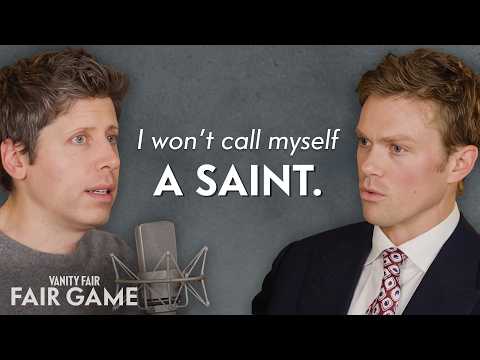
The thing that is different now is, I mean, more people feel it and believe it, and we may have a window of public support to do it. - Except when you're, you know, negging Elon on Twitter, and the way that the AI industry behaves amongst itself. - Who do you think has been nicer to each other in that relationship? I won't call myself a saint. - No. - But I'm not sure if I'm the one that you're supposed to come after on between Elon and me. - I know. I'm just saying, it's not putting it on you directly. It's on the industry, that like, now it's time to grow up in a way, and collaborate.
- Look, I don't like bullies, and I think Elon's a bully. And so I think once in a while, you got to punch a bully back in the nose. And I also think like, Elon, like many bullies, only respects people who do. So if you want me to be able to work with him, maybe you should be happy I hit back once in a while. But I will work with Elon, of course. - The American public, the American psyche, I think, tends towards doomerism because of the culture that many people grew up in. They've seen "The Terminator", "The Matrix", "2001: Space Odyssey", even "Dune", where computers are outlawed. And so it's very easy to imagine a world where this goes very wrong.
Can you paint a picture in which it goes right? Like help me imagine it and be specific. What's the government, the role of the government? What's the role of these companies? And think mid and long term. - Yeah. - Okay. - First of all, I answered the last question with like a little bit of a joke, but we really do need to get, we need the companies to get along with each other enough to make good collective decisions for our future. And of course there's going to be competition between the companies. There can be many ways in which that's good, that clearly has worked to deliver incredible products and services.
But we need even people who don't like each other to make good collective decisions among the companies' researchers, and leadership. And, you know, whatever criticisms you might have of me or OpenAI, I think we are very good about trying to find consensus and common ground and working with other people. So that's one thing I think we need and that we will do. Another thing is we need our governments to step up. There should be limits to the amount of company, power that private companies have.
And there should be the will of the people reflected in some of these incredibly consequential decisions society has got to make. And so I think it looks like, with a combination of the companies and the governments, we have figured out a shared set of safety standards so there is not something that feels like race conditions where capabilities are going to get ahead of safeguards, and we're going to take sort of societal skill risk. - [Mark] Yeah. - And then with subject to that constraint, we will have figured out a way to fairly and equitably distribute, not just the benefits of this technology, the cures for disease, everything else, but the access and the power of it so that society can collectively keep inventing the future, people can build all sorts of amazing things, companies.
I think the boom in entrepreneurship that we're going to see here is going to be completely amazing. - What about the people that don't want to be entrepreneurs though, necessarily? You know, some people want to work in a restaurant, or on a farm or whatever. So what about-- - I would love to work on a farm. Go work on a farm. I think we will, I also think part of this is that if this works, society collectively gets so rich, and I'm sure we'll have to figure out how to change a social contract and the way the economy works a little bit. But society gets so rich that the aperture of what people can do, and the ways you can make a living, the amount of time you can have for hobbies, and family, and whatever will go way, way up.
- In a interview last year, you talked about how there are 15,000 people a week who commit suicide, that about 10% of the world is talking to ChatGPT. And so that's 1,500 people a week. And you said that keeps you up at night. And by comparison, we think about car accidents, and we're obsessed with seat belts, and airbags, and traffic laws, and there's a whole multinational infrastructure built around keeping us safe in cars, to say nothing about planes. I know this is a big concern for you, and I'm curious what you're doing right now to protect people who are considering self-harm.
- We have put a huge amount of work into the product to minimize self-harm, and make sure that our product is a huge net good. I believe, and we work with a lot of experts who agree that it is possible to make ChatGPT and similar products into one of the greatest mental health tools ever. And the amount of people, you know, that we can help and impact here, because a lot of people do go through very hard times is huge.
- Would you include mandated reporting? - I mean, obviously experts have extremely different views on whether mandated reporting is good or not. We follow different laws in different places. I wish there were more expert consensus on what to do there and when. And there's clearly times where it's a really bad thing. But on the whole, we, of course, believe that like human expert help being made available to people in crisis is a good thing. - So do you know who Laura Riley is? - I don't. - She is a journalist.
She wrote an essay in The Times last year. Her daughter committed suicide after speaking to ChatGPT. ChatGPT did not tell her to kill herself. - Mark? - Yes. - [Publicist] We have two minutes left. I want to be respectful, but I'd like to move on. And we talked a little bit about talking about the future and what's coming. Can we go a little bit there while we have time? I mean, we have- - I'm just going to finish this question. - I can run a few minutes over. - And then we'll go back to what we were talking about and then wrap. - [Publicist] I know. But we really actually have to walk out the door in one or two minutes, so.
- Okay, all right. - Let me answer that one. - Okay, thanks. So Laura's a journalist. She wrote an essay from the New York Times about how her 29-year-old daughter, Sophie, died by suicide after speaking at length to ChatGPT about her decision. ChatGPT did not instruct her to kill herself, but did agree to act as her therapist. She called the chatbot, Harry, and it helped edit her suicide notes. So I've spoken to Laura, and she was talking about AI chat logs, and how they could be almost like real-time roadmaps of how people come to the decision to take their own lives, and how that information could shape policy, and therapeutic approaches, mental health education.
You know, I know this means a lot to you. So I was curious what you think of how useful that information could be, and if there's any plans to do anything with that data. - I mean, first of all, like, these are some of the hardest questions that we face or that anybody developing this technology faces. We try to rely on expert opinion as much as we can, but experts also aren't sure what to do. This is just like, this is new. And the fact that someone in a moment of need that maybe can't get help or isn't willing to talk to a therapist can get some help here.
Clearly people think there's a version of this that is good. There are also clearly versions of it that are bad. You know, should we release people's private data in some of their hardest moments to researchers? I think probably not without their consent, or I should say not without their consent. Do we want to find ways where we can work with the community to address the mental health crisis in the world, and for our products to be helpful there? Of course, yes. - Okay. So what's one thing that you think people should not use AI for?
- Replacing human connection. - And beyond intelligence, what's a quality that makes us human? - Emotions seem like something that AI doesn't really have yet. - And you don't think that they'll develop emotions? - Not in the same way. - Okay. We asked ChatGPT if you could ask Sam Altman one question that he hasn't answered before, what would it be? And it said, "Sam, what is one thing "you privately believe about the future of AI "that you've not said publicly?" "Not because it's classified, "but because you think people would misunderstand "its implications.
- That it's all going to be great. I think that the reason that that's hard to say publicly is there are of course these very scary things, and we have to get those right, and people want to hear from me, and I really do care that we're going to get all those right, and we think about that every day. But I'm incredibly optimistic for the future. - Before we finish, I want to do a bit of a free association with you. So I'm going to say a name, and then you respond with the first words that come to mind. Not their job title, but anything else you want. Okay, Donald Trump. - Powerful. - Dario Amodei. - Pass.
- Ollie Mulherin. - Best person in the world. - Ms. Rachel. - Band. - Peter Thiel. - Great. - Pete Hegseth. - Don't know enough to say. - Gwyneth Paltrow. - Interesting. - Bernie Sanders. - Consistent. - Ilya Sutskever. - Brilliant. And caring, and warm, and wonderful person. - Ronan Farrow. - Many things that could be said. - Elon Musk. - Not nice. - Okay.
- You know, like even though I would say like, I don't want to make a comment about Dario, or I think Elon is not nice, I really want to emphasize how willing I am and how willing I think our whole company is to work with them. Like, we feel the weight of this. - Sam Altman, thank you for joining us. - Thank you. [calming music]
SHARE THIS TRANSCRIPT
Also on The Altman Tapes
FULL CHART →- 16
 Sam Altman: How OpenAI Wins, ChatGPT's Future, AI Buildout Logic, IPO in 2026?
 - 17
 Sam Altman on Building OpenAI & Betting on the Impossible
 - 18
 Marc Benioff & Sam Altman | Dreamforce 2026
 - 19
 How Sam Altman Actually Uses Dots to Run OpenAI and His Life
 - 20
 OpenAI Town Hall with Sam Altman
 - 21
 The OpenAI Founders On Their Plan To Battle Elon, Compute And Everything Else